Episode Transcript
[00:00:00] Speaker A: Welcome to Woowooville, the next stop on your spiritual journey, hosted by two fellow travelers who found a soul connection on the path to higher consciousness. Our goal is to help you navigate the choppy waters you're likely to encounter on the spiritual path by sharing our experience with you each week.
Join us as we spill the tea on what it's like to wake up to your authentic self.
Hello, my name is Emeril, and I'm here with.
[00:00:32] Speaker B: I am Lola Singer, and today is one of those days where I just feel really calm and relaxed because, oh, if you heard noises, that's the cat. Joining us for the podcast, Mia, she always takes opportune moments to join us.
But going back to me, I'm having one of those cool, calm, quiet, reflective days.
So it's a little challenging for me to do a podcast today because I'm not feeling up.
I'm just. But it doesn't mean I'm feeling down either. I'm just calm, relaxed, and I'm integrating. I've had a huge shift over the cut last couple days, personally working with the concept of cruelty, which is usually our cruelty to ourselves. Right. And having to take a good, honest look at it so that I could clear it, which I have worked on.
It seems to be successful because now it's that quiet integration point. Which is why we wanted to call this episode an homage to what I.
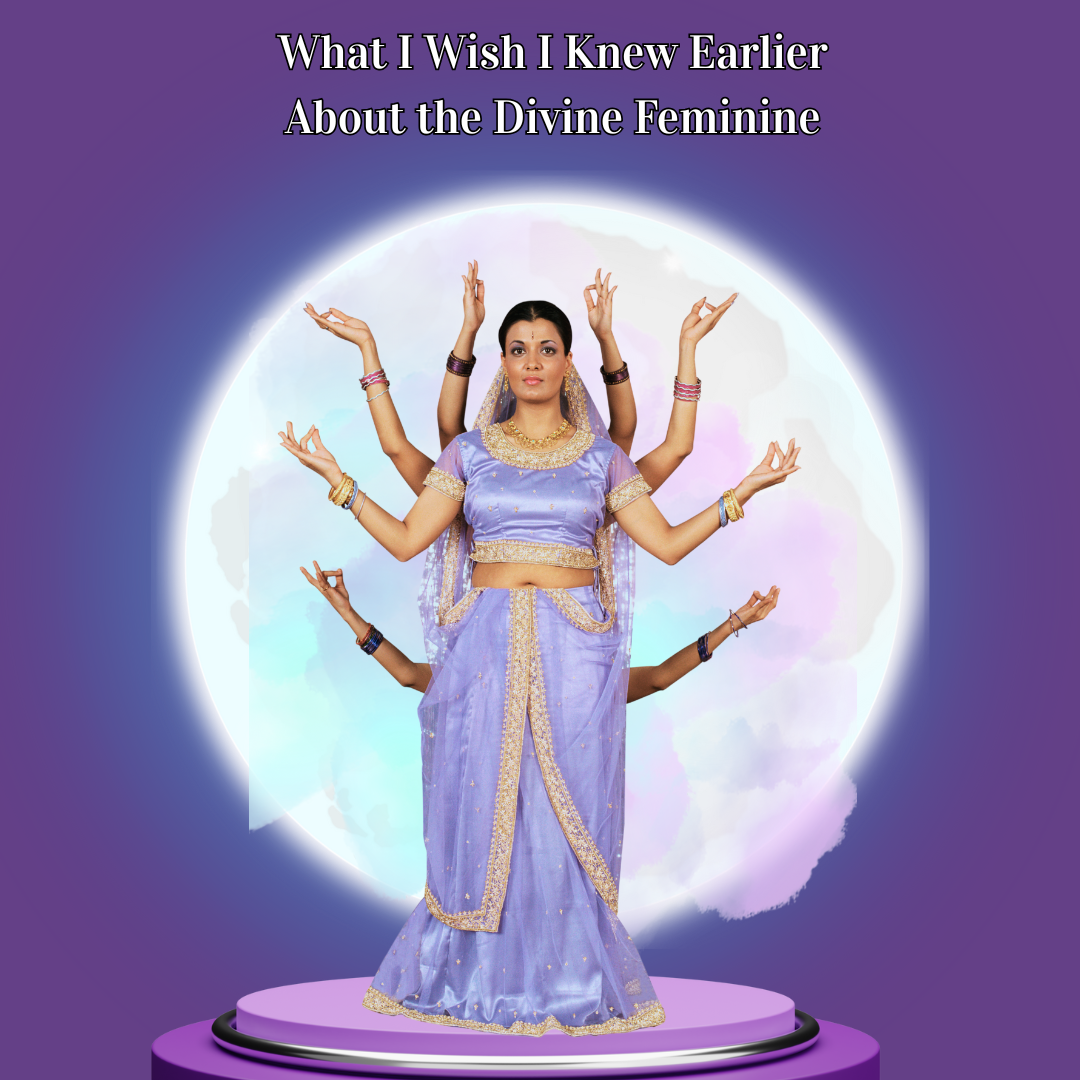
[00:01:35] Speaker A: Wish I knew about the Divine Feminine.
[00:01:37] Speaker B: Yes, an homage to the divine Feminine.
As you know, for those of you who've been listening for a while, Amaral and I really want to help people who are new to the spiritual journey.
And I didn't really understand the concept of the divine feminine when I first started. It came up over and over and over again through my tarot classes. But I was really confused because my teacher kept talking about the Goddess, and then he'd be talking about these personalities of the goddess, and they were so different.
And he kept saying the goddess, and it was like, you know, my little rational brain was going, I don't understand this. But that's because the goddess is not one aspect. There's so many aspects of the feminine, but the main thing is receptive.
It's the part of us that says, okay, I'm worthy of being quiet, discerning and receiving information or. Or even attracting, you know, things to us. So. And there are different aspects of the feminine, which is what the teacher was trying to teach me. I was trying to lump it all together, and that just doesn't work.
[00:02:55] Speaker A: Yeah, but.
[00:02:55] Speaker B: So we're. We're going to kind of let you know what we wished we knew earlier about the Divine Feminine. And what is your perspective on that?
[00:03:03] Speaker A: So, first and foremost, most, the biggest thing that I want to, like, mention is we live in a society where everything is like, go, go, go. Take action, like, do this, do that. And it's like without the Divine Feminine, it's a great opportunity for us to just stop and kind of look within and kind of slow down and really connect to that energy of that inner divine Feminine that like, we just, for example, like, take, take it slower, honoring yourself, honoring your integration.
And really, it's like that slow period. A lot of times people think like, oh, well, I'm just wasting time or whatever. But the thing is, if you really, truly put it in perspective, you deserve time off, you deserve to rest.
[00:03:56] Speaker B: Well, not only that, you do need to.
[00:03:58] Speaker A: Exactly.
[00:03:58] Speaker B: Because if you've had a big push, like I had in the last couple days, it's been very masculine. I'm going to address this. I'm going to face this, I'm going to work through this. Right.
It has to balance you. You, you have to have the yin to the yang.
[00:04:15] Speaker A: Yeah.
[00:04:15] Speaker B: You have to have the quiet and repose that goes with the action.
It.
If you don't allow that, especially on the spiritual journey and you're not allowing basically what happens, my understanding that we can make these big spiritual shifts mentally, emotionally, very quickly.
Right. But then the nervous system needs to catch up. So, number one, that's probably the main reason you need the quiet time, is for the body to integrate. But number two, when you're being quiet, you're more open to messages.
[00:04:51] Speaker A: Yeah.
[00:04:51] Speaker B: And so that's when you might get your greatest insights.
And, and, okay. And in a practical sense, while you were talking, I was thinking, well, one of the things people can relate to is like, vacation time.
Right. You're talking about the push, push, push. We all need that vacation time to unwind. So doesn't it feel great just to lie on the sand at the beach?
[00:05:11] Speaker A: Yeah.
[00:05:11] Speaker B: And do nothing?
Right. So I think even if you're not spiritual, you can relate to that concept. Right.
[00:05:18] Speaker A: That and also, like, sometimes I think that we have the weirdest way of looking at doing nothing. Like, when you're doing nothing, you're actually doing something for yourself.
And that's what people don't understand. Like, they look at it as, like, well, I'm not being productive. So it's like the, the balance between, like people always say, like, well, if I'm, like, not doing anything, I'm not making money. Well, what about the other? Like, there's.
It's almost like the way I look at it is almost like, like wealth, divine wealth comes in all shapes and forms. And for me, like, for me, for example, I learned how to value, like giving to myself because that itself to me is wealth too.
[00:06:01] Speaker B: Yes. And that goes with something that we found on an Internet search that I just want to read verbatim.
It's. It said when we. The feminine is the energy that says pause, breathe, let something come to you instead of forcing everything into being.
So it's the allowing. And you're right, we're in a culture that's about go, go, go. You know, you have to hustle.
And people even feel guilty about taking any time to themselves. It's that puritan ethic that this whole entire country's built around.
So I guess that's what. I guess we both agree that's one of the things we wish we knew earlier about the divine feminine is that it's okay to take that calm, quiet break, let everything settle in, be open to receiving insights.
You don't have to move from this to this to this to this. Now that said, my, my co host had a tendency especially early on, not to really do the resting. And you've learned to appreciate it more and more. So can you elaborate on that?
[00:07:14] Speaker A: Yes. So when I started my journey, just like everyone else, I was programmed that if I didn't work though or something, even though there is no finish line in spirituality, but I was, I was just constantly going and going and going because I'm like, the more I did, it's like the more I clear and the more I cleared and I got to the point where my body just really was like, okay, I've had enough. And it pretty much went into shock and it just wouldn't collaborate with me. And I just couldn't. Like, I just started feeling, physically, I started feeling exhaustion, I started feeling that, the, the feels of burning out.
And I realized that I wasn't honoring my body. I wasn't really listening to what I was saying. And it's like that's that, that main connection that we have with ourselves from the spirit, the emotions and the physical, like, it's really important to balance just those aspects of it because the thing about it is our bodies, it's our vessel. Like, whether we like it or not, we are in this vessel. And this vessel is going to take us either for a long ride or not so long of a ride. And that's part of taking care of ourselves.
So I had to learn how to listen and how to connect better with my body. And what's really interesting is I left the physical till the very end. And, man, was I in for a surprise. Because everything, like all the releases we do as far as traumas and stuff, are stored in the physical. So when you start focusing on the physical, pretty much anything that you've been avoiding, anything that will just come up in by really tuning into the physical. I realize that there was.
There's a lot more gain when we start listening to what our bodies want to tell us, when we start finally giving it the rest it needs, finally understanding and asking, like, the whys, like, why, like, why is it that. What do you want me to do now? Like, how much? Like, I mean, I just got back from a retreat and I've been sleeping a lot, taking a lot of naps, but I've just been listening to what I need to do, drinking a lot of water, keeping myself hydrated. And it's one of those things where, if you put it to perspective, we care so much. Like, we have people that we care about and we're always so catering to them, so why can't we do the same for us?
And what really comes down to is my programming was so extreme in the beginning that I was always doing things for everyone else except for myself. And still, until I started healing that part of me, I was able to come back to myself and being like, okay, I need to be taken care of, and I need to be taken care of by myself. Because if. If I expect anyone to just jump and try to do things for me, that's not going to happen.
And the more I started tuning in, the more I started connecting to that Divine Feminine aspect, the better I started feeling. The more nurture I started feeling, the more peace I started feeling and the more connected. Because we're going into that. When you go to that Divine Feminine is like going back to the womb, being able to be taken care of instead of you doing all the action, allowing things to come to you, allowing the information to be expressed to you, being able to listen, being able to just really tune into yourself.
[00:10:53] Speaker B: When you're in that receiving mode, that quiet, that calm, it's a really good time to start developing your psychic skills. You might hear something that. It's like, oh, wow, my strength. Start. I'm getting a message, you know, so you may be more clairaudient than you realize when you're in active mode, but other, I mean, they call it subtle energy. For a reason. You might start noticing certain signs. Like when I hit on something that feels like it's so true, whether it's in my own mind or when I'm doing a reading for other people, I. The hairs on my. On my arms stick up and I get goosebumps. So I call those the truth bumps, you know, know. So that. That would be your opportunity to start finding out what are, what are the subtle signs where I'm hitting on something that is really, really resonating for me or for other people? What do I feel in my body? How, How?
And if you don't have that quiet time to notice it, you'll never really understand that you've already got these innate skills. It's just a matter of being aware of them.
So it's the best time to start practicing your intuition and trusting the messages that you're receiving.
And I like what you said about, you know, the nurturing and the caring for yourself, because that is what the divine feminine is.
So let's go into the aspects of the divine feminine, because every one of them is about nurturing and caring. So if we look at the archetypes, it's always made mother crone, right? When you're talking about the, the. The goddess. See, that's why I was confused. It's always the you. My guys in the audience might have heard the term triple goddess.
That's what we're talking about.
So the feminine is not one aspect. It's the maid who's young and impetuous and learning and daring and, oh, won't it be fun to try this, this, this and this.
It's the mother who becomes more aware, more mature, more nurturing, more. More aware of others and caring for them. And then it's the crone. Now, the crone is the elder woman, right? You could call her the midwife.
See, and a lot of people misunderstand the crone, but the crone is about.
Because she's associated with endings. She's associated with this death. But we got to remember when we're talking about death in the spiritual plane, we're not. We're not always talking about physical death. We're talking about shedding what needed to go. And so she midwives you into the new you because the old you has to go. And she's older and wiser, so she understands what you're going through because she's lived it herself. She's got that wisdom.
So that's one thing I certainly didn't understand that I was pretending I did when I was in tarot classes when, when Eli, my teacher was talking about the goddess. The goddess I didn't understand. When he's talking about the goddess, it's made mother crone and then within each one of those there's archetypes.
[00:14:01] Speaker A: Yeah.
[00:14:02] Speaker B: So like some of your favorite archetypes for a maid could be like Diana the huntress. Right. In Greek, Greek mythology.
Or any, any young maiden, you know, like in the Arthurian legends. What Maid Marian, you know, or you know, this is a young woman who's unfettered so she, she can do anything she wants. She's not married, she doesn't have a child yet. So she can have adventures. Okay.
I don't know. Can you think of a maid like even from your culture, any, in any maiden goddesses you can think of?
[00:14:38] Speaker A: I can't think of anyone right off.
[00:14:40] Speaker B: The pretty much any female warrior type goddess is probably going to be a maid like a Valkyrie.
[00:14:47] Speaker A: Oh yeah, yeah.
[00:14:48] Speaker B: And then the mother. Well, I know you can talk about the mothers because he works really well with the mother archetypes. And the first one I can think.
[00:14:57] Speaker A: Of is Mother Mary.
Mary Magdalene. Quan Yan.
There's endless, like it's just, there's so many. But it's, it's interesting to me because I was like talking to Lola before we got started on this subject and how for example, depending on our upbringing is what, where our comfort zones at and what we have to heal.
And for me coming out growing up in a culture that was during those times because now it's a lot more open but during those times it was a very close minded. So I got to deal with the toxic masculinity a lot. So my go to was the divine feminine. So in the divine feminine I have found comfort, I found love, I found peace in, in because the, the, there was no divine masculine as far as like really people that embody that energy. So it was all toxic masculinity. So I wanted nothing to do with it. And I mean even, I'll admit it, I wanted nothing to do with even like the divine masculine. It almost like I grew up feeling like you have to prove to me that I can trust you. And it was weird because that did not take me very well to places because remember when we resist something and we're putting so much effort into like oh, you're not like I don't want you around me, you're just kind of like creating that chaos a little worse. Like you're adding fire to it. But the divine feminine, like I absolutely have Always connected with Kuan Yin. And even though it's not even from my culture, I just, I read a book and I recommend it. It's called the Sophia Code. And it has to do with the divine feminine and how it's coming in and it's helping the divine masculine. But it talks about so many different, like Lola said, so many different aspects of the divine feminine in different deities, different mothers, different divine feminine aspects of it. And it was just beautiful. Like, whenever we were reading her chapter, I just connected the most with it. And she is the goddess of.
Of.
Wait a minute, just spacing today of empathy, of just forgiveness.
And I mean, they all have that aspect. But what I'm saying is I just connected with her in such a deep level, especially with her background story, that I just, whenever I see her, I, like, need to get like a little statue or something that has to do with her. And I still have, like, quite a few at home because she's just helped me to get through a lot, a lot of my anger and my pain.
I had a lot of resentment, so she was perfect for that.
[00:17:57] Speaker B: Yeah. Her backstory is very interesting because she goes from complete disdain of humanity to compassion for humanity and well deserved in her early life.
I want to go back, I want to retract what I said about the warrior goddess, because I realized while you were talking, it's like, well, no, a lot of those mothers are warriors too.
[00:18:17] Speaker A: They are.
[00:18:18] Speaker B: So I totally misspoke there because I was thinking of Sekhmet.
And, you know, when a mother gets up in arms to protect their children or their tribe or their, you know, humanity, they're going to go into warrior mode. So I just asked for a few examples of each of the archetypes while you were talking. And if, with permission, may I go back and talk about the maid? Yeah. Okay. So with the maid, I like the way that this, this inter. This information is coming. It. It's describing the maid as the initiate and the dawn, like the dawn of the day.
Okay.
And if you want to think of it in modern terms, the maids, the person discovering his or her gifts for the. The first time I said his or hers. We have aspects of the feminine, regardless of gender.
[00:19:07] Speaker A: Yep, exactly.
[00:19:08] Speaker B: So you're discovering your gifts at the first time, and you. It's like you're. You're building a new major life shift. It's a new beginning. Right. And you're starting to learn the boundaries is what the maid is about.
And so the question with the maid is, who am I becoming?
And in Myth.
I don't know how. Well, I overlooked this because it's my favorite myth. It'd be Persephone, goddess of springtime.
[00:19:35] Speaker A: Yeah.
[00:19:36] Speaker B: Oh, man, talk about another really good story. Oh, my gosh. If you guys have not read the myth of Persephone, it's going to teach you about light and dark and the balance between and then. Yes, it does mention Diana or Artemis. And then Inanna, we forget in. And Nana was a Mesopotamian goddess. And she was. She was an airline. She was a pilot. Sorry, not an airline pilot.
[00:20:01] Speaker A: She's.
[00:20:02] Speaker B: According to the cuneiform. She had her own craft. She was a warrior, she was young. She took whatever levers she wanted. She was enjoying being that youthful zeal.
So that's what I wanted to make sure people understood. At first I was thinking, well, if it's warrior, it's probably a maid. But no, it. Then the. Then there's the mother who's the more mature warrior. But she's. She's not fighting for, like, independence, she's fighting for her brood.
Does that make sense?
So when you're thinking about the mother, they said to think about that as the midday sun or the full moon, right?
[00:20:41] Speaker A: Yeah.
[00:20:42] Speaker B: And so it's about being the person who tends and builds. It's the healer who shows up, works in a steady way.
You could think of this as, in modern days, as a business owner who's nurturing a project.
And it's the part of you that can hold duality and you can create boundaries. That's why, you know, I think when the boundaries get challenged, that's when the mother, the mama bear, comes out. But normally the mother's very nurturing, wants things to grow.
And the classic examples, one of them you like very much, Isis.
[00:21:19] Speaker A: Oh, yes.
[00:21:21] Speaker B: Isis is the Egyptian goddess who is about resurrection and motherhood and birth.
Demeter would be the mother of Persephone. She is like Gaia. Right.
And then the crone is.
They're describing as the sage, which I was talking about the wise woman. Right. And they're talking about that being midnight. Okay. And she's wisdom. She's the surrender of your ego. She's the ability to see through the illusion. The only way she could do it because, like, the maid still sees a lot of illusion. Yeah, she's impetuous. She, you know, but the. By the time you're the crone, you've lived those experiences, so you've seen through a lot of the illusion. And so that's why the crone can help you a lot. She's intuitive.
She's the elder of the group. So, you know, you can go to her. She feels safe.
She's died and rebirthed so many times that she can walk you through it.
And she's the teacher.
And then some of the examples from mythology would be Hecate, which some people think is absolutely frightening. But that's the thing with the crown. The crone does this all out of love when something needs to go. So Hecate is a Celtic God goddess. Oh, the Morrigan. That's another Celtic goddess.
So I guess I bring this up because I didn't want to.
I didn't want to mislead people about. The mother can definitely be a warrior, and even an elder crone has that warrior capacity, but probably more as a strategist. Does that make sense?
So is there anything you want to add to that?
[00:23:08] Speaker A: I think you could pretty much cover that whole part up.
There's a. There's a really cool thing that I just saw here that I just wanted to go back and it sounds really good, but in one of the things they talked about the divine feminine, to look at her as an antidote to burnout, because, yeah, she really. It truly is. And what we don't. What when we move forward and we continue to move forward and we don't like, we're like thinking of ourselves, oh, we don't need to rest, we don't need to do anything. That is a straight path to burnout. And I hate to kind of put this example, but I feel like that's kind of a world in a nutshell right now, because everyone.
[00:23:52] Speaker B: It's done that way by design.
[00:23:54] Speaker A: And unfortunately, if people continue to just pull and pull themselves in so many different directions and feeding into the programming of, you have to be a mother, you have to work, you have to do all this. Yes, you do have responsibilities, but at the same time, your biggest responsibility should always be yourself. If you're not well, you can't be there for others.
That was a hard lesson for me to learn.
[00:24:16] Speaker B: Yes. And I always use the example with people when I do readings of a soup kitchen. Let's say you're running a big soup kitchen for the homeless.
How are you going to feed them if you haven't fed yourself? You're going to faint, you're not going to be. You're not going to be able to perform what you. What you want to do.
So.
Yeah. And then speaking of burnout, I think we can all understand burnout.
So we need that counter weight, that time to just allow the Burnout to pass.
You just can't keep going, going, going without a collapse.
So then that brings us to your breath work. Right?
Because that's a chance to be calm, have some time to yourself, receive the messages. So.
And breathwork is interesting because it is a mix of masculine and feminine.
[00:25:15] Speaker A: Well, and see, here's the thing about breath work, because there's different breath techniques and there is a breath technique that actually connects you with the divine feminine. And it's a softer, it's very gentle. It's literally just like a deep breath in and then just letting it out. But one full breath and you, most people underestimate. And I'm gonna live, raise my hand here, like, because I'm gonna just like say that I underestimated because I'm used to more of a, I guess not really tougher, more of an action based breath work. But when I tried this, when they said, oh, it really connects with the divine feminine, I thought, oh, this is going to be gentle. This is going to be a walk in the park, no issues there. And I start doing it and all of a sudden what came out was like insane. And I'm like, but that proves to us, because we are under the belief that strength is always by this like massive, like you have to be super strong and all this stuff, but feel the burn. Yeah. But strength can be soft too. And sometimes softness is the, the biggest strength.
[00:26:18] Speaker B: Absolutely. The strength of the feminine. Because it's quiet strength doesn't mean it's not showy, but it is powerful.
And another good example is like, you know, a rock in the middle of a stream.
The masculine would try to bore through that rock where the feminine goes, oh, no, I'm water. I'm just going to go around it. Yeah, you know, so it's, it's a different approach to solving a problem.
And it doesn't always require a forceful response to be effective. Like, a good example of this also is, I know one of the people I used to take classes with swore that every time there was a problem, his wife would sleep on it. It'd be like, okay, I'm going to sleep on that. And answers would come to her in the night and she'd wake up and go, okay, this is how we're going to make this work. And that's a very good example of the strength of the feminine. She was allowing something to come to her. She trusted it would come to her in her sleep time, in a dream, or with an aha moment when she woke up. And it usually did. She would set that intention.
Oh, that's a good point. Because the, the setting in the tension is like the masculine. Right. I'm sending it out there.
[00:27:41] Speaker A: Yeah.
[00:27:42] Speaker B: But then the. The. For something to manifest, you have to allow. Once the intentions out there, you have to allow it to come.
[00:27:49] Speaker A: Yeah. So it's the trust in the surrendering that's more of the divine feminine, the action that it takes in order to bring something into physical.
[00:27:58] Speaker B: Yeah. And the metaphysical matches the physical because masculine would be electric, catalytic, moving forward, whereas the feminine is the magnet, the attraction.
[00:28:11] Speaker A: Yeah.
[00:28:12] Speaker B: So we.
These concepts we're talking about, you can actually see in everyday science.
Physical science. Yeah. So always think of the masculine as electric and the feminine as receptive, magnetic, and you'll understand why they need to work together as a team. Mm.
Yeah. So I was just trying to think of it. I.
I can't think of a specific example, but I'm sure most of us can understand the concept of. We, We. We acted like we needed to force. Force a solution instead of allow a solution.
[00:28:49] Speaker A: Oh, yeah.
[00:28:50] Speaker B: And that sometimes backfires.
[00:28:52] Speaker A: Yeah.
And isn't that though, like, that's really like, the. How it works out, like, even having the three different types of divine feminine, like the youngest one wants to force things, wants to experience.
[00:29:06] Speaker B: Well, I don't think she wants to force. She wants to explore.
[00:29:08] Speaker A: Yeah, Explore and experience things as opposed to hold back and use wisdom before just jumping into anything.
[00:29:16] Speaker B: Right. That's the difference definitely between the maid and the crone. Yeah. That. That said, Even when we're 60 years old, like I am, sometimes you need the maid to initiate something.
So you're going to be. It doesn't just your chronological age does not matter which type of feminine is going to help you in the moment.
[00:29:37] Speaker A: Exactly.
I definitely agree with that.
[00:29:43] Speaker B: Yeah. So one of the things that we found in our pre podcast exploration of this topic was a practical advice for how to get in touch with your divine feminine.
So one of the ways you can do that is to just take two minutes of stillness in the morning.
And you know what? Most of us cannot sit still for two minutes.
[00:30:14] Speaker A: Isn't that crazy?
[00:30:15] Speaker B: No, it's not easy. We're not trained that way. It doesn't matter if your brain starts moving in a different direction.
The whole idea is just to keep the body still and see what comes to you.
So don't set a goal or anything. You know, it's just like what you're going to do is you're going to sit for two minutes and you're going to pay attention to what am I noticing? And that might be the time, like in the morning you go, oh, my gosh. The birds have always been chirping outside, but I've been too noisy in the house getting the breakfast ready to notice. Right.
That's how the divine feminine works. It's. It's quiet.
And I actually think that's a really good idea.
[00:30:54] Speaker A: It is. Another thing, too, that I definitely can add to this, because I do it myself, is watch your breathing.
So many times we're just so caught up in going, going, going. And it's like when you start watching your breathing and you're conscious of your breathing and you are intentional about your breathing. First. First of all, what does breathing do? It brings us into the present.
Second of all, when you're paying attention to your breath, especially if you start going slower breaths, deep breaths in and letting them out, you're allowing things that are, like, weighing on you to kind of like almost melt off of you. So you're taking that time to yourself to really tune into yourself and also be present with the things that are going on.
And once you actually do it for enough, you totally feel ready for your day because you're like, okay, I've done my part of getting myself back together and now I can go on and do the things I need to do.
[00:31:53] Speaker B: Yeah. And it's just that pregnant pause, very feminine. Right. The pregnant pause in your day just to.
[00:32:00] Speaker A: Just to be in any time during the day, too, not just in the morning.
You can take, like, focus on just taking some deep breaths in and just letting it out. Feeling like. Like once you feel like you get yourself back into the present and whatever is worrying you, it's done. That's all it takes. It's a simple exercise that can go so far.
[00:32:23] Speaker B: Yes. And I just want to talk about one of the most important aspects of breathing.
And that's when people feel like they're out of control. It is the one thing they can control.
So I don't know why people don't want to do it.
[00:32:37] Speaker A: I think we're taught not to focus on the like we want because we feel at that time that it's so big that only something as big as the what's bothering us can fix it, when truly. No. Because it would be like adding wood to a fire.
You want to do the opposite. You want to calm yourself so that you can be enlightened with new ideas, with new ways of. How do I take care of this?
[00:33:04] Speaker B: Absolutely.
I would.
I'm kind of fighting because the guides want me to talk about this, but it's. It's very.
I'm a little conflicted about it, but last week I got a call from someone that I had helped before with energy healing, and she was literally on her.
She was talking about suicide.
And she said. And I. You know, I have been a counselor on the phone before, so I was recommending the, you know, the local hotline. I pulled it up while she was talking. She said she already talked to them and that they don't care.
And so it was just like. Okay. So the only way I could get her in. Into the moment and into the present, which is the feminine. Right. The stillness. Because her mind was racing because we did breathing exercises together.
[00:34:01] Speaker A: Oh, good.
[00:34:03] Speaker B: And one of the best things you can do when you're kind of stressed out is put your hand on your lower part of your belly and one hand on your heart and then breathe for four seconds in and then breathe out for six seconds if you can. But if you're in. If you're really stressed out, it's hard to count. So just try to breathe out longer than you brought breathed in. And we did that together. And that got her to the point where she. She calmed down a lot. I hope she's okay now. I don't know. She hasn't checked back with me, but I feel like that was the divine feminine coming through. Through me.
[00:34:42] Speaker A: Yeah.
[00:34:42] Speaker B: It was like, I'm not. I'm not leaving this person in the lurch.
[00:34:46] Speaker A: Yeah.
[00:34:46] Speaker B: How can I? You know, that's when the mother comes in. Right.
And. But yet you still have to have, like, a clinical distance. We're not getting enmeshed.
I was definitely wanting her. I mean, I.
I asked her to make me promises to, you know, promise you'll just do the breathing for the rest of the day, you know?
[00:35:06] Speaker A: Yeah.
[00:35:06] Speaker B: And so I think that's an example of how vital the stillness is and how important the breathing is. And that quiet time when your brain is on overdrive, it can really, really help.
Okay. I guess I was supposed to talk about that. I feel like that was private to someone else, but.
[00:35:33] Speaker A: Well, I think it's a great thing to bring up because the truth is, as much as we always want to be put together, sometimes there's just. We struggle. We all struggle at times.
And unfortunately, there's a saying that I really like. They say, like, we're on the same.
We're.
We're going on the same path as far as we. We are like human experience, but not all of us are Traveling. The same thing of us, like, we're traveling, we're going through water. Some of us are on boats, some of us are swimming, some of us are on yacht. And every cycle changes. Cuz just those people that were so comfortable once upon a time, things started rising in their lives and then their situation changes and now they're like going a different thing. So that's why it's so good to always honor everybody where they're at, because you don't know what they're truly going through.
[00:36:27] Speaker B: So.
[00:36:27] Speaker A: So when people come to you, even if you're not feeling that well, like, just think of yourself as like, what if this person is like on their last.
They're just feeling like they lost it completely. And they are like just seeking someone to hear them.
[00:36:47] Speaker B: You know, this is another story for me this week because I, I went to go grocery shopping and there was a person, you know, outside with a sign, you know, just standing there, not bothering any. But, you know, but. And sometimes I get that feeling like I'm gonna go, I'm gonna bring this person money. I, for some reason I want to give this woman money. So I walked up to her and I said, on a cold day like morning like this, I know, you know, there's something going on. So this is what I can give you right now. And her face lit up and she was just so beautiful and so sweet and just seen her smile and she asked if she could give me a hug and I said, of course.
She gave me the most genuine, beautiful hug.
It was just kind of like, wow.
It felt like a connection.
So you never know when you get this intuition.
It just changed her in the moment. And then when I came back, you know, she was waving at me and she told me she liked my purse. And you could see that, you know, she had lifted, but it wasn't me. It was because there's. There was something beautiful in her that just needed to be acknowledged. And I felt it.
[00:38:04] Speaker A: Yeah, well, and I think it like, the one thing that we all create, we all seek is connection.
And that connection can come in many forms. And a lot of those forms are we want to be heard, we want to be valued, we want to be loved, we want to be respected.
All those traits are so, like, important.
And that also humanizes to not be able to see anyone in our lives as any less or more. It's like we are all in this together because we are all human. We all, we all are going through the experience.
And it's very interesting because like Lola said, sometimes it's hard, like to be able to witness someone and to give them support without you going down with it too. Because that's a lot. Sometimes it's. But that also doesn't help that person. Because if you truly care for people and truly care for humanity, we're building each other up.
[00:39:06] Speaker B: Oh, I didn't mean to interrupt you, but that's a really good example of the mother, because just think of any mother who's got a three year old. You got to let them wander, you got to let them fall, so they learned from their lessons. You got to let them find out that when you told them not to touch the stove, there was a reason why.
So that still applies to us in adulthood, especially on the spiritual journey. You've got to. You can be supportive, but you can't live someone's lesson for them.
[00:39:35] Speaker A: Exactly.
[00:39:36] Speaker B: And that's a huge one. And especially at the beginning of the journey, you want to help take care of everybody, you know, and get that savior complex thing.
[00:39:44] Speaker A: Exactly.
I once upon a time, and this is like, this is just me like completely being open to you guys and something that I had to learn and spirit's like nudging me. So I guess it's really important to share is I learned that even if I saw someone that wasn't so fortunate, that was like being in the street.
I have never felt sorry for them. Because the thing is, when you feel sorry for them, that's you putting yourself on a higher pedestal than them. Instead, what I like to do is always like, send them energy because I know deep within my heart that this is only a part that they're going through, but that they're going to rise up and they're going to truly step into their, their power and become what they are meant to be in this life.
And that changed my way entirely of just being like, around people and stuff. I traveled a lot around the world and I've been to places where there's very extreme poverty.
And sometimes extreme poverty can lead to a lot of things that are not the most positive. For example, as a tourist, you get beg money.
And the begging money is one thing because you can always say no. But there's like some places where they're very consistent or there's some places where they purposely want to trick you into buying things.
And so it's like it all plays out like that, but it's just like, do you. Like, I always look at like I want to be part of a solution, not part of a problem. So I always focus in just how can I help people understand that they are so much more than whatever situation they might be facing at the time. That instead that they, they themselves have the power to rise at any given point and become something more for themselves.
[00:41:34] Speaker B: Which is interesting because this is still feminine. Because it's allowing. It's, it's, it's not allowing for you. It's allowing for them to do whatever they need to do, do to feel more empowered. That said, you know, something like you, you sending them the best positive vibes for, for them to pick up on. You know that. Yeah, that's masculine, but it's done from the feminine line.
[00:41:57] Speaker A: Exactly. It's the connection of the two. Even when I give people like, when I know that they definitely like, they. There's no doubt in my mind that they need resources. I'll give them money. And I like being a reiki, the master. I charge up the money with good energy.
There's one thing you can definitely do.
And you know, that's, that's just so.
To me, it's like I. We live in a world where I, where I'm at now in this world is how can I help others? And by empowering them. Because that's the biggest thing. It's like when you empower a person, you're showing them not only that you care for them, but that you're not looking at whatever situation they're on. Because we go through ups and downs in life constantly. And that's all of us. And none of us can say, oh, we have always been in this part. And it's like everything has been so easy, but the more we work on ourselves and the more we remove those limiting thoughts, those limiting programs, the better we start feeling because we start seeing life in a different light. It's not that we become better, it's just that we see things that we couldn't see before.
[00:43:17] Speaker B: Yes. And that said, speaking of helping people, we asked for some mantras to help you feel more in touch with your feminine, whether you have a masculine form or not.
[00:43:28] Speaker A: Yep.
[00:43:28] Speaker B: And there are some good ones here. So why don't I read one and you read another. The first one is for people who are over overthinkers. And that's what we were talking about earlier. Right. When the thoughts are not. Are going all over the place, you can't get grounded. It's just a way to get your nervous system calmed down.
And the mantra is I soften and what's true becomes clear.
All of that is so feminine. The softening, the clarity.
And I Was thinking of water because the feminine's all water and the masculine's fire, and the water purifies.
So I love this. I soften and what's true becomes clear.
Would you like to read the next one?
[00:44:14] Speaker A: Yes. The second one is the description is this keeps stillness from feeling like a void. It creates permission rather than pressure. And the mantra is, I receive what I'm ready to know.
Perfect, perfect, allowance, perfect. Surrendering into what needs to be done.
[00:44:34] Speaker B: It's not, like, boring. For more information, I am receiving what I'm ready to know. And that's the spiritual journey anyway.
We always talk about layers of the onion getting unwrapped. You know, you're not meant to learn it all at once.
So I love this. I receive what I'm ready to know.
Makes it digestible.
Okay. And then for anybody who's feeling vulnerable or wounded, dealing with fears and thinking that, you know, that rest could be irrelevant for you mantra is I can pause without disappearing.
I think that goes with what you talked about earlier with that I'm not, I'm not doing life right unless I go, go, go to help you learn to say, I can pause without disappearing. I can go right back to what I was doing. But this pause is important.
And then having learned how important doing something physical with the mantras is, especially like, Like I talked about putting your hand on your heart, your, your, the other hand on your lower belly to help you come calm down.
I asked for some ways for you to physically relax enough to really connect with the divine feminine.
And would you like to read the first one?
[00:45:57] Speaker A: Yeah. So the first ones is the unclench a m micro relaxation cue.
Unclench the jaw.
So how many of us, when we stress out or when we tense up, we just, our jaws just become.
[00:46:16] Speaker B: So I think we just do it normally. No matter what, our jaws tend to get clenched.
[00:46:22] Speaker A: Drop the shoulders by one inch.
[00:46:24] Speaker B: Yes.
[00:46:25] Speaker A: And soften the belly just slightly.
[00:46:29] Speaker B: So just the physical alone. But we're gonna have a mantra that goes with it too. But go ahead and try this right now, you guys. I. Trust me. Unclench your jaw, drop your shoulders one inch, and then soften the belly just a little bit.
And then the mantra is, this is.
[00:46:49] Speaker A: The body releasing broadcast mode.
[00:46:52] Speaker B: Broadcast mode would be the, the outgoing catalytic, masculine.
So we do need that release. But I, I, I have used all of these, especially the dropping the shoulders when I'm tense. And it works.
[00:47:05] Speaker A: Oh, yeah.
[00:47:07] Speaker B: Okay. The next one's called the receiving bowl, which is perfect because the bowl would be the feminine, Right? Yeah. This is a tiny gesture. It's almost invisible. So you could probably do it in public.
You hold the palms up on your lap and you relax. And it's just like a bowl that's resting on your lap.
And then you're open to receiving. Your hands are, you know, in that position.
And you can say to yourself, this posture tells my system.
I'm not chasing, I'm allowing.
I'm not chasing, I'm allowing.
Yeah.
And that's good to help you with your intuition and your flow.
[00:47:48] Speaker A: I love that.
And the third one is the back body lean, the opposite of leaning forward to grasp. So sit back into the spine.
Feel the support behind the seat.
[00:48:07] Speaker B: No, behind the heart.
[00:48:08] Speaker A: Behind the heart, sorry. Feel the support behind the heart and breathe once through the back ribs.
And you can say, this is the feminine in one breath.
Being held instead of holding everything.
[00:48:29] Speaker B: Isn't that beautiful? Being held instead of holding everything. It gives you the permission. Gives you permission to relax, doesn't it?
[00:48:39] Speaker A: Yep.
[00:48:42] Speaker B: So those are just some suggestions that we found using, you know, the Internet and, and web searches, so you can find them yourself too. You could just put in you Divine Feminine mantra as a search or Divine feminine connection.
[00:49:06] Speaker A: I love the balancing Divine feminine meditations on YouTube. They're very. Good night. They're just very relaxing. A lot of them, like, a lot of them are short, so you can do that like in the morning or once you get back before you go to bed.
[00:49:21] Speaker B: And I'm sure some of them look at certain aspects of the Divine feminine, like perhaps the chrome more the mother.
[00:49:27] Speaker A: Yeah.
[00:49:28] Speaker B: Or. Or all of it at once.
[00:49:30] Speaker A: Yeah.
[00:49:31] Speaker B: I think the most important thing about the Divine Feminine is something we haven't talked about yet.
Because she's water.
She's always the solution.
I love thinking about that, that she is, you know, that's this. And the solution usually is to calm down, be receptive, and see what comes to you, isn't it?
[00:49:56] Speaker A: Yep, that is true.
[00:49:58] Speaker B: Yeah.
So one of the things that we've just got a few minutes left to that, I think, is it just popped in my head for a reason, and that's for us to divorce if we can.
Our own mothers we grew up with from the concept of the divine feminine because as we know, our mothers are vulnerable and wounded.
So maybe if you can think of the best aspects of your mom, that would be the divine feminine or the best aspects of your grandmother.
So that's what I would encourage you do or teacher, you know, even if it's a man, somebody who's been Very supportive. Helped you find your solutions, helped you calm down. Helped you see who you are.
Tended your wounds instead of growing them further.
So. So what are some of the adjectives you think of with feminine? Because I was just thinking about, you know, healing. Receptive.
[00:51:09] Speaker A: Calm, receiving.
[00:51:12] Speaker B: Claire. Clarity. Clarity.
[00:51:16] Speaker A: Allowing, kindness.
[00:51:20] Speaker B: Nurturing.
[00:51:24] Speaker A: Giving.
[00:51:25] Speaker B: Yeah.
Those are all aspects of you.
Every one of you listening. Mm. You've got those all in you. And when you. When you're kind to somebody. I guess maybe that's why spirit nudged me to share those personal stories. When you're kind to somebody, you're being kind to yourself as well.
[00:51:43] Speaker A: Yeah.
[00:51:43] Speaker B: And you're experiencing what it is to be a mother, even if you're not a mother.
So it's. It's really beautiful.
[00:51:52] Speaker A: And I think the most beautiful thing that we get to. That we get to experience on part of our. As we grow spiritually especially, is that sometimes we have to mother ourselves.
All those times where your mother did the best they could, you can come back to that inner child and give the love that it needed, give the support that it needed. What. Whatever it was that you were going through that you felt like your mother wasn't there for you, you are able to heal that by you being there for your own inner child and healing those wounds.
You can do it through a meditation. You can do it in so many ways. You obviously set intention of where.
Where did I feel like I was left behind? Or where did I feel like I wasn't loved enough? Or where was. Where did I feel like I was just abandoned?
And that will get you to a lot of really deep healing that sometimes needs to be done.
[00:52:50] Speaker B: Yeah, I like that. Because, you know, when you go into healing yourself by treating yourself as the best mother you can be or the best auntie you can be, or father.
Yeah. But we're talking about feminine right now.
You know, the thing but the feminine is she loves her children no matter what.
So the parts of you that even you might be ashamed of when you. When you come in approaching it as a divine feminine to look at it, you're going to learn to love the things that you've once thought were the worst aspects of yourself, because you're going to understand what. Where the wounding came from. So, you know, one of the things I guess we haven't talked about with the mother is the deep empathy she has.
[00:53:39] Speaker A: Yep.
And that's another thing, too, that a lot of people don't realize is that your deepest wounds become your biggest strengths when you're able to face them. And you're able to understand them and look at them for what they really are.
[00:53:52] Speaker B: Which goes back to Quan Yin, doesn't it?
[00:53:54] Speaker A: Yeah.
[00:53:55] Speaker B: Oh, my gosh. If you guys have never read the story of Kuan Yin, it will break your heart at first, and then it just becomes such a loving tribute to the divine feminine.
[00:54:06] Speaker A: Yes, she does.
[00:54:07] Speaker B: And her ability to forgive and love no matter what.
[00:54:13] Speaker A: Yeah.
[00:54:14] Speaker B: Then it's interesting too, because you start thinking about aspects of the feminine. There's also the jealous, you know, like Hera, you know, but it's usually because, you know, the God has been particularly naughty.
[00:54:25] Speaker A: Yeah.
[00:54:26] Speaker B: So that's that justifiably angry.
[00:54:28] Speaker A: Well, and there's so many aspects of the divine feminine, like the dark divine feminine. And it's not. It's dark. It's not dark because it's evil or mean. It's just that sometimes we need like those. That aspect of a divine feminine to get rid of things that are no longer belonging to us. Like, it's almost as if, like you're going into the shadows and yeah, you can bring light, but what would be more effective than someone that knows about the shadows and has the wisdom of the shadows?
[00:54:57] Speaker B: We only have a few minutes. And that's so important because the feminine is also the deep subconscious.
What you're not aware of what's been hidden from you, the darkness that you know. And she's also. Also associated with the sea. You know, Mary, Mother, Mara, Maria, all that means sea, right?
[00:55:14] Speaker A: Yeah.
[00:55:15] Speaker B: So the deep, dark ocean, the great unknown of the darkest part of the ocean is the feminine as well.
[00:55:23] Speaker A: And the most sacred place where you can be, where you're the most protected, is the womb. And the womb is darkness.
[00:55:31] Speaker B: Absolutely. So you may.
That's a good metaphor because we might think we're afraid to look at the darkness, but the darkness is what's been nurturing us.
[00:55:42] Speaker A: Exactly.
[00:55:43] Speaker B: She's been holding on to your pain until you're ready to shine the light on it.
[00:55:48] Speaker A: Exactly.
[00:55:49] Speaker B: So that's another beautiful aspect of the feminine.
Feminine is very, very complex, but very over the overalling arch is love.
[00:56:01] Speaker A: Yes.
[00:56:02] Speaker B: Even the one that seems harsh. It's all about love.
[00:56:07] Speaker A: And I feel like the path of that we go through as far as understanding ourselves and understanding those parts where we felt left out by that divine feminine. A lot of the times where it wasn't that we felt left out is that we prioritize the pain over the love. And what was available for us that we could have taken, but the pain blinded us from being able to See.
[00:56:31] Speaker B: It, but she held it safe for you.
[00:56:35] Speaker A: Exactly.
[00:56:35] Speaker B: She loved it. She loves every part of you. So she's not going to harm you heart, harm any parts of you. She's just gonna hold you, hold that in her stillness till you're ready for it.
[00:56:49] Speaker A: Yep.
[00:56:50] Speaker B: So I guess that describes the spiritual process in a nutshell, doesn't it? Yeah. We could probably go on about the Divine Feminine for five or six more episodes, but that's not really going to work today.
But I hope that that was a good introduction about the things through our experience that we wish we knew about the Divine Feminine. Further, because I grew up, you know, a time where when it was like, oh, the man has all the power, but it took. It was quite a switch for me to understand how powerful the female is.
[00:57:20] Speaker A: I just want to share the one last thought before we go is the fact that the Divine Feminine is what's the rising of the Divine Feminine. It's what's making the Divine Masculine come out.
So that's why it's so purpose. It's so important for that Divine Feminine to just really come out because it has a purpose. It's always had a purpose, of course, but it's just doing something to change, even to bring out the Divine Masculine.
[00:57:46] Speaker B: Yeah. She's the container to hold him when he's ready.
[00:57:48] Speaker A: Exactly.
[00:57:49] Speaker B: Yeah. So it's important to understand that because the. The Divine Masculine is definitely ready to rise. And so we need to bring our feminine qualities out to embrace them and say, welcome. Yes.
[00:58:02] Speaker A: Thank you so much for tuning in.
This was a very.
I don't know, I felt good. It felt like very nurturing, very loving episode. So I hope you guys got the same from it and don't forget to share it.
[00:58:15] Speaker B: Thank you. We'll see you in a week.
[00:58:16] Speaker A: Thank you.