Episode Transcript
[00:00:00] Speaker A: Welcome to Woowooville, the next stop on your spiritual journey, hosted by two fellow travelers who found a soul connection on the path to higher consciousness. Our goal is to help you navigate the choppy waters you're likely to encounter on the spiritual path by sharing our experiences with you each week. Join us as we spill the tea on what it's like to wake up to your authentic self confidence. Hello, my name is Amril and I'm here with.
[00:00:30] Speaker B: I am Lola Singer, co host of welcome to Woo Woo Ville, where we talk about the spiritual path and some of the things that are obvious about it and some of the things that are mysterious about it. Right?
[00:00:42] Speaker A: Yes. And today we have a special episode with two guests.
[00:00:46] Speaker B: Yes. And it's the mystery. Right, because what's the name of the episode?
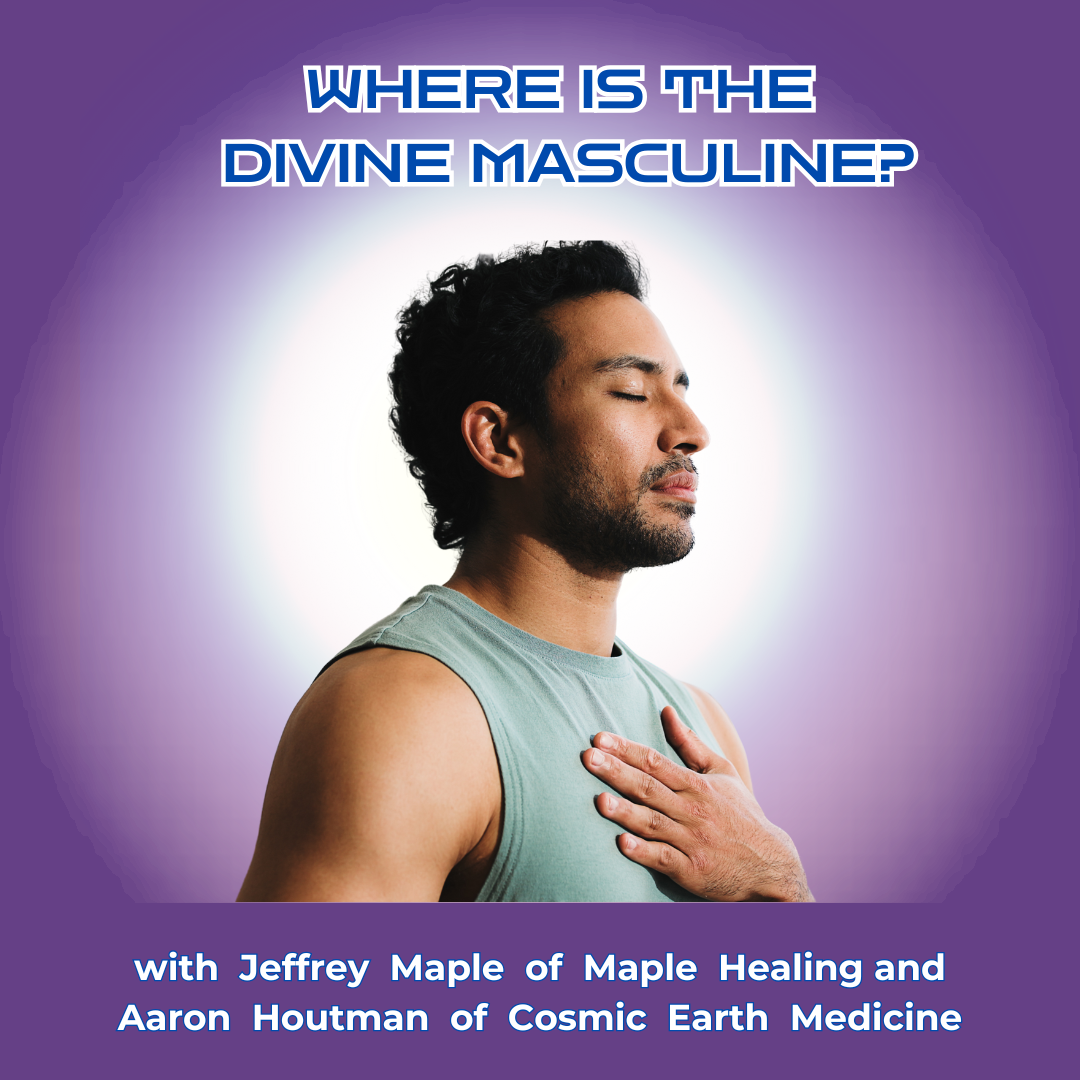
[00:00:50] Speaker A: So the name of our episode is where is the Divine Masculine?
[00:00:55] Speaker B: And I just heard a lot of women going, yeah, where is he?
Well, we have two examples here with us, two men who I met on my spiritual path at some of the psychic fairs in our local community.
And I thought it'd be very interesting to look at the male perspective of what it's like to be on the spiritual journey.
And I'm gonna drink this up because I've always been curious what it's like from a male's perspective, because when you go to things like psychic fairs, or you go to meetings or you go to classes and look around, you're going to see it's probably easily 75% female there, and it's probably actually more like 85.
I think it's a rare breed and we're so happy that they're here, that wants to be part of this journey, who represents the chromosomes that are masculine. So let's talk to them. We have someone who's been with us before.
This is Aaron Houptman. Do you want to tell them a little bit about yourself?
[00:02:00] Speaker C: Oh, hey, I'm Aaron and I run a business with my wife called Cosmic Earth Medicine. And we are crystal mineral dealers. We also do crystal talismans and we do copper energy tools.
And Amiral and Lola invited me here for this episode and I'm really happy to be here.
[00:02:23] Speaker B: Thanks. And then we also have someone that our audience has not met before, but who I worked literally next to several times at fairs and became good friends with him because he's just. Well, we're looking for the Divine Masculine. I can verify, in my opinion, he is one of them. And that is Jeffrey Maple. Do you want to tell them a little about what you do Jeffrey.
[00:02:46] Speaker D: I'm Jeffrey Maple.
I am a physical healer.
My business is Maple Healing.
I work on mostly women with physical trauma, sexual trauma, menopause.
I find trapped energy in the body, locate it, and together we come up with ways to remove it. So it's not just I'm going to do it, I'm kind of the catalyst and I bring it to the surface and I give you the tools on how you are going to remove it and grow from it and be able to pass that to others.
[00:03:31] Speaker B: And he's a very good healer. I have seen him work on people in booths next to me and they always feel better. Yeah, yeah, you can.
[00:03:41] Speaker C: And he's worked on me before and I've had instant, instant benefit from it.
[00:03:47] Speaker B: Yes. So we're asking, where is the Divine Masculine? Well, in this case, there's two examples right across the table from me. So I wanted to let people know. I'm so grateful that I get to be at psychic fairs and metaphysical events because I see the Divine Masculine. They come, I talk to them, they do exist. But in your day to day world, where you're going to the same job with the same people every day, you might not get an opportunity to see them the way I do. So I just wanted to assure especially the women out there that, yes, the Divine Masculine is rising. I see them every, every time I go to a fair. So let's dive in and talk about what the Divine Masculine is first.
Just a little outline.
By the way, I printed some things up on paper so, you know, you might hear some rumbling of the paper or ruffling of the paper throughout the episode. Don't worry about that. It's just because we like to keep it real and not edit things here.
So the Divine Masculine isn't showing up as grand gestures or sudden awakenings.
It's showing up quietly. And that might be why it seems like, where are they? It is quiet, it's subtle, and it's men who are willing to listen longer than they used to.
Men who are less reactive even when they don't yet have the language for why.
Men who are curious instead of defensive, men who feel the strain of old roles and don't want to pass them on.
Men who are beginning to value steadiness over dominance.
Men who are comfortable saying, I don't know, and men who show care through action rather than words for women. The hard part of this shift is that it's an eternal shift with the men. So you're not going to see it right away before it very apparent with their actions.
So I just wanted to start out with that. And do either of you have any comments about any of what I just read there?
[00:05:47] Speaker C: Yeah, there's a couple things that popped up to me when you were reading it about being that. When you were talking about being less reactive. That's been a huge lesson in my life.
And defensiveness, because I would take any kind of criticism or anything that I didn't necessarily agree with as I would get really defensive. And that's. These are two things that I've worked with big time in my life. So I think these are really big things. As far as what I've seen a lot of men, men's behavior, and my behavior as being like a really natural thing is to. Is to react in a defensive way.
[00:06:28] Speaker B: Yes. And I failed to mention that there's another divine masculine presence here, and that's my co host, Amaral. And you actually can relate to that, can't you, from your past?
[00:06:39] Speaker A: But I feel like I really was looking forward for this interview as well, because here's my different concept of it, because for me, being a gay, open male, I've always been around women. So to me, I never really looked for because I was just like, this is where I've always been. And my issue was I was always around toxic masculinity. So because of that, I have to change those roles too, and become more accepting and realize that that divine masculine can be empowering, can be supportive, can be caring, can be expressive in ways where I don't have to shut down. And of course, that's part of my journey that I had to heal. So I really want to welcome you guys and I'm super so grateful to have you guys, as well as just being open to communicate and really share with our audience what it's like to be that divine masculine.
Yeah.
[00:07:32] Speaker D: I think for me, if I'm going back to childhood and I first think about being a, you know, quote unquote, super feeler, being a sensitive male child, I was most comfortable and still to this day, most more comfortable with feminine energy.
So now, looking back at it as an adult male, energy to me is like sandpaper. It's rough when I work on men, it's very rough, rigid. And I've always been attracted to women because the energy is light. It's like velvet or soft, easy fabric. And there's no rift there. There's no, like, you're taking up my space, you know. So I was always drawn to be in crowded places with women opposed to men. I felt like I needed to cower for some reason and not quite felt that confidence. I didn't have that role model who was in my life that would show me that, hey, this is how men act, do. It was. It was kind of the opposite. It was like my teachers were not the best role models. So I had to learn that on my own.
[00:08:51] Speaker B: I think that's a good point for almost everybody. We didn't have good role models. We had a toxic masculine storyline that was being pushed on men.
[00:09:01] Speaker A: Yeah.
[00:09:01] Speaker C: And I think a big thing about this spectrum, I'm gonna call it, of divine Masculine, is the healing and the retraining and the learning that we've had to do, as mentioned coming up, and kind of really softening our edges and becoming willing and to be soft.
And that's something that has been really vulnerable.
[00:09:23] Speaker B: Vulnerable is. It's strength, isn't it? Vulnerability. Strength. It is. Boy, did I have a hard time learning that lesson myself, you know, because, you know, females, we have masculine and feminine energy too. And my masculine pride did not like the idea of being vulnerable because I came in here with. With that warrior attitude.
You know, I'm gonna. The patriarchy's fallen. I'm gonna be part of that ride, you know, And I had to learn about vulnerability being strength as well.
[00:09:48] Speaker D: It's scary.
[00:09:49] Speaker B: But you know what's interesting? Cause you. I mean, if you guys could see them physically, they're both very athletic and muscular.
And, you know, normally we don't associate that with being soft and tender too.
[00:10:04] Speaker A: Yeah.
[00:10:04] Speaker B: You know, so I think that's. That's why I love both of you as examples of Divine masculine and ph.
[00:10:10] Speaker D: We will get judged just based on appearance.
[00:10:13] Speaker B: Yes. And I know that we've talked about that at fairs because Jeffrey is very muscle bound. Very muscle bound, but he does very delicate. He just flexed his packs at us.
[00:10:24] Speaker C: There's hardly even any room on the table for me. His muscles are too big.
[00:10:29] Speaker B: And that worked against you in some ways, because I think a lot of the women who are feeling vulnerable and want the energy healing are. Are looking at you and assuming there's like a stereotype. He's big, he's burly, you know, and I associate that with the tough warrior, the guy who wants to go scrapping in the bar, you know, things like that.
[00:10:49] Speaker A: So.
[00:10:51] Speaker B: And I know it's been interesting because I met you when you first started, and I've seen you work with women and your confidence grow and grow and grow.
So can you tell me what that was like? Especially at first when women Were looking at you and going, oh, my gosh. It's a big. It's a big burly guy, you know, do.
[00:11:08] Speaker D: I can feel it. I can sense it.
If they're in their head a lot, I'll hear it.
I can hear him walk by, look at me and be like, oh, no, he's not putting his hands on me. And sometimes I would just let it go. Or sometimes I would smile and just tell them, like, I don't do massage so you don't have to worry. And they look at like, were you just in my head?
[00:11:32] Speaker B: And you know what's interesting? When you first started, I think you were really trying to show that I'm not trying to be imposing. You would just sit there quietly and you wouldn't like, say, hi, I do this. You would just wait until a man or woman walked up to you and asked you questions. And I think that was a good approach.
[00:11:51] Speaker D: Yeah. I've learned that I've become more vocal, more friendly using my voice. It's been a push, just keeping everything.
I want to be quiet. I'd rather be introvert. The army forced me to be an extrovert. I didn't like. There's no being quiet. It's use your voice, command voice.
You give, well, you bark orders and this and that. But, you know, doing my work, it's great finding the vulnerable people who are brave enough to come up to me because I look a certain way, but once they're in my energy, it's like, oh, you're not big and scary. You're actually. Your energy is very calming. It's strong, sturdy, you know, like a tree. It's grounding, but it's also very gentle when it. When it comes across.
[00:12:43] Speaker B: So, yeah, you just self described the divine masculine.
[00:12:48] Speaker D: I've learned to embrace that and really own the divine feminine in me. And the divine masculine. Like, why not be. Let's find that balance where I can bridge both in all aspects of life, too. Whether you're in the corporate world, military, where I left tech, whatever it is.
[00:13:11] Speaker A: I wanted to also bring out something that's kind of important too.
So another thing that I'm finding right now that I just want to share is collapsing those judgment ideas of what a male's supposed to be like, Especially if you're ever going to be approaching someone, for example, that has healed, that's more open on their divine masculine side. You also like I'm speaking here to the. To the women is you need to realize that anything that has been taught to you most More than likely it's going to be toxic masculinity. So you need to break down those walls of experience, at least giving a chance.
Because you can't just say, well, we're waiting for the divine masculine to rise, but yet you're not experiencing, accepting the divine masculine to rise as well.
[00:13:56] Speaker B: I'm so glad you brought that up.
[00:13:58] Speaker A: So that is one of the things that's really important for you guys to understand. And I think that this episode is going to really work with letting you guys know what it truly is about and how to welcome it in, to open up those doors to receiving them. Because I'm sure that whether you're a healer, whether you're just communicating, like, for example, when you come. Aaron, when you're communicating with just selling crystals and stuff, um, especially. I was very surprised, Jeff, to hear about you working with victims, because that takes a certain level of, like, letting their guard down as well as just connecting with them. If, if, if.
Let's see. Someone as a woman, has experienced so much trauma during their whole life caused by a male, then their perspective is gonna be different until they heal themselves.
So we are all on this path. We are all healing, but it's also about accepting and changing those ideas of what once was taught to us in every level.
[00:14:52] Speaker C: Yeah, thank you for bringing that up. I think that's a really good point because people, especially I find myself. I react to the world the way it reacts to me.
Like, the way the world sees me, sees me is a. Is really how I am to the world.
And when, you know, I noticed when I first started doing shows and setting up booths and being Boost, I would have to literally leave the booth in order for people to come inside and shop in my room.
[00:15:19] Speaker B: Really? Because they didn't.
[00:15:21] Speaker C: I was standing in my booth. They wouldn't come in.
[00:15:22] Speaker B: Well, do you think it's cause you're imposing? Cause you're tall?
[00:15:25] Speaker C: Yeah, I'm tall. I'm a big guy. Maybe I have a resting, mean face. I'm not sure what it is. I try to always smile when I'm working, but I notice that I need to be at the very edge, like in the back behind a table. Otherwise people won't even.
[00:15:40] Speaker B: That is. See, this is the perspective I wanted to hear from you guys. What is it like to be representative of the male gender at these events?
So that's an interesting that you had to compensate that way.
[00:15:53] Speaker C: Yeah, yeah, totally. And I've learned ways around it now. Like, I'll see people coming and I will smile And I will greet them before they're even to my booth. Like, as soon as I see you and I make any kind of eye contact, I'm almost doing a doofus kind of hey, how's it going? Kind of thing, just to let them know that I'm not aggressive.
[00:16:12] Speaker B: Yeah, you're disarming them.
[00:16:13] Speaker C: Yeah, disarming them. And I don't mean to. I don't know. Disarming may not seem right, but I'm just.
[00:16:18] Speaker B: I'm not saying that in a military sense. I'm saying it in an emotional sense.
[00:16:22] Speaker C: Yeah.
[00:16:22] Speaker A: Okay.
[00:16:22] Speaker C: Yeah, yeah.
[00:16:23] Speaker A: Okay. I want to add a little bit to that too, as well.
I think that things change. Like, for example, like you stated when you first started, it was kind of like, almost like you threatened them. But as you opened up yourself and your frequency started rising, because a lot of these people are very much feelers. So because of that, whenever you start, like, as a divine masculine, you start working on yourself. You're more open. And then you. You also expand on that energy, so you make people more comfortable.
[00:16:51] Speaker C: Thank you. Yes, that's true. That's something that I have grown. That's a way that I've grown for sure, is that I'm. From when I first started to now, I'm way more open, way more soft. I let my feelings and my heart just be out there.
And that has really helped people approach me as well.
Before that, I was mostly doing crystals and minerals. I was doing the copper energy tools, and I was doing these energy tests, muscle testing, with people, which required me to talk to them, make physical contact with them, and be in their space.
So it was really hard for me at first to understand that people didn't want to be close to me. Not because I'm mean or smell bad. I always put on deodorant.
It's because they were intimidated by me. And I come off right off bat. I come off as a very kind of big and masculine, almost.
I don't want to say domineering.
[00:17:44] Speaker D: Imposing.
[00:17:44] Speaker C: Imposing.
[00:17:45] Speaker B: Imposing, yeah, that's a good word.
[00:17:46] Speaker C: Imposing, man. And that can keep a lot of people away. I did have to learn, like you said, I had to learn to be open to my heart. And the energy just. For me, being open to my heart has actually helped attract people.
[00:17:59] Speaker A: Yeah.
[00:17:59] Speaker B: Oh, absolutely.
[00:18:00] Speaker C: Yeah.
[00:18:01] Speaker D: I learned that from the fairs.
Having you next to me and always, like, whispering little, you know, gems of, hey, try doing this or that.
And what I found is owning my shit, practicing what I preach. And it started with, I can only control Myself, my thoughts and my feelings and what I do. I can't change how people perceive me. And by doing so. It was the way I spoke to people, the way I spoke to myself. Because everything that I do on the inside is a projection on the outside. So it was self love, self care, and really embracing that. Spending alone time, a lot of alone time. I didn't need to be with someone if someone wanted to be with me. You know, like, come compliment me, me.
Don't complicate me.
[00:18:54] Speaker B: That should be a T shirt.
[00:18:56] Speaker D: It was, it was also.
What do I put in my body? What am I doing to my body on the inside? Well, it's food. It's. It's working out. It's. That gives out an oppression to people.
What am I putting in my head? What am I feeding my brain? Is it, is it positivity? Am I trying to learn and grow every day with working on my self?
What are my fears? What do I run from? Because I find that our fears and the stuff that we run from is the shit that we're supposed to tackle and go after the uncomfortable. Get comfortable with the uncomfortable, because if you go looking for it, you'll meet it head on and you'll be an advantage. Opposed to being at a disadvantage when you're not aware you're having a crappy day. And then all sudden of a sudden, you know, you get the business and you're like, fuck, I wasn't even ready for this.
Yeah, that's my deal.
[00:19:56] Speaker B: When you were talking, I was thinking about how men are encouraged not to do that, to really face their fears. Which means, look, doing their shadow work.
[00:20:08] Speaker D: Yep.
[00:20:09] Speaker B: They're trained to say, I'm tough, I can handle it, you know, stiff upper lip, all that kind of stuff. Still in this day and age, you know, I've lived many decades and observed it.
[00:20:19] Speaker D: Yes. But those are, I hate to say it, the weakest men I've met.
[00:20:23] Speaker B: Yeah, they usually are.
[00:20:25] Speaker D: The biggest mouth in the room is the weakest. And it's really true those, those sayings. And that the reason why I've. I've grown and gotten more people to come see me is because I'm willing to roll over and show my belly. And if you're coming to me with your trauma, you know, I got almost 15 years in the military. I've three, you know, times in combat, I got enough vulnerability and stories to share with people and be like, I will match you, or I will come out and say something where it's like, oh, wow, I've Never heard someone share, you know, something like that. Guys don't normally share that stuff. And it's like, well, it should be because why not be show strength through vulnerability? Because to really break down and say something that you're afraid of, like how is that not strength? You know, the old paradigm, if that's the right word, of you know, the old John Wayne being tough, like, you know, you don't show emotion. It's like, okay, mute, you're nothing. You're no help. You're just a walking figure. Like express it. Show that, you know, be about it. Cause that's another thing, you know, I learned from the military is that, you know, lead by example and that's with your mouth and also actions. So actions and words have to align. It can't just be, you know, cracking a whip. No one's going to follow that. That's fear.
[00:21:47] Speaker B: I love what you just said because women need to know the divine masculine even exists. They doubt it. But what you're doing with the men is you're serving as models.
And I think those are both very valuable just by being you.
[00:22:01] Speaker C: Yeah, totally. Like I've had, I've, I've had, I've interacted with people at my booth, men who have done long since of time in different penitentiaries actually hugged me or I hugged them and then allowing it and feeling their body relax and them telling me, this is the first time that I have hugged a man since I was a little kid.
So there is, there is this lead by example, be someone, that someone, be someone that you'd want follow. Yeah. And I'm not even trying to like have people follow me, but that's, that's really what it is.
[00:22:41] Speaker B: Well, I think that's part of the spiritual journey. You, you see people for who they are. You accept people more because you realize they're just a reflection of you and the pain that somebody who's been incarcerated feels. You have the empathy to understand, maybe not fully, but to understand a good portion of their feelings so that you can have that one on one relationship which men are craving as much as women.
[00:23:05] Speaker D: Yeah. And I would say if there's more men dealing with their fears and vulnerability, we would have more divine masculine out there. So it just goes to show you the strength that it actually takes to do this is, is not for the faint. And I wrote some things down for, you know, since we're known.
[00:23:24] Speaker B: So please feel free to share your insights.
[00:23:27] Speaker D: Is we're also not for the faint heart. It's like you have to.
[00:23:34] Speaker B: Oh, wait, so you want women to hear this as well as men?
[00:23:36] Speaker D: Oh, definitely. This is, this is more for the women. It's like a guideline for the divine masculine. Like, if you come to me, you can't bring all this baggage. It's like, but you're talking about a.
[00:23:50] Speaker B: Personal level, not a professional level.
[00:23:52] Speaker D: Personal.
[00:23:52] Speaker B: Yeah, I just want to make that clear.
[00:23:55] Speaker D: The women who are seeking, where is this divine masculine? We are out there. However, we have boundaries.
We ask that you heal the childhood trauma.
It's. Have you spent the alone time healing yourself? It's not, you know, serial dating, jumping one relationship to the next, because you are bringing all that stuff from one relationship right into the next and that next guy is getting the treatment of the last one. Unfairly emotional maturity, you know, Are you working on those things, your triggers? And if so, you're going to get tested every day. Work on it. Take a deep breath. Like, you don't have to react.
[00:24:43] Speaker A: It's.
[00:24:44] Speaker D: Catch it, you know, don't beat yourself up over it. Write it down if you have to. I didn't react when so and so triggered me. Hey, you know what? High five. Good for you. That's working on it.
Yeah, those, those are, yeah.
[00:24:57] Speaker C: Being, being someone like you need to, you need to create. Just like men are expected to create a safe place for women, I believe that women should also create that same space, space for a man to be. Because being vulnerable is really hard. And a man will be completely free on the, in society, but be in the penitentiary in his mind and inside of himself because he has so many feelings, he has so many things and ways that he wants to be and he just feels trapped inside of this idea of what, this old school idea of what, of what the masculine and what a man is supposed to be. And you can't even really be yourself.
[00:25:31] Speaker D: No, because they, I, I've learned that some women like to nitpick. Like they want the old masculine, but they don't want this new stuff because it's like, oh, I have to do that work. No, I, I want you to pay for this and do this, protect, provide.
But it's like, okay, so I'm gonna do this.
You have to bring, you know, the same level of, have you created a safe space for me? Can I be vulnerable with you? Can I lead and provide, but also feel like, hey, you know, we're equals, you're my ride or die, you know, we're in it together. But if, if you're nitpicking and causing all this stuff and treating me the way that you treated your previous person, because you haven't healed from that relationship. Well, that's not equal.
[00:26:20] Speaker A: Well. And I think one of the things that's been brought up that's really good that I'm glad that you guys are bringing up is that everybody, like, wants, like, for example, I hear so many times women being like, well, I want to be with someone that, like, it's more connected and is working on themselves and they want. Want that divine masculine as a couple or as like the person they want to be with, but yet they're not willing to do the work themselves because it's more about sounding good than actually following through in. A lot of this world functions on projections. So, for example, owning up to projections means if you see something or a behavior that you're like, that's what you have identified your story with. You're going to see that the world is that. So, for example, with women, I find it that they're like, well, we don't want to be sexualized. We don't want to be seen in a sexual thing. But yet, if that's the story you're telling, you're bringing that energy that you're magnetizing that into you. And vice versa goes with men. Men that don't work on themselves, then they focus so much on that sexual, like, quick pleasure energy that does not really satisfy anyone, but it's an addictive energy.
[00:27:35] Speaker C: It keeps on going and going.
[00:27:36] Speaker A: And I guess the key that I'm getting to is part of our growth, whether male, female, it's really working on those projections. It's really seeing yourself with different eyes and being able to see yourself in the mirror and say to yourself, what is this person bringing out of me? So when you're seeing, like, as a female, if you're seeing the masculine, like, whatever feelings you're getting, a lot of them can be projections of. So you need to check yourself before you can actually really have that good interaction. And the work never stops. And we all know that. But also, the more we evolve, the more we raise the bar. As far as someone meeting us there, that's. I had the funny thing that it said, the more you work on yourself, your dating pool just lowers to, like, smaller and smaller and smaller. So it gets complicated. Yeah, it's good.
[00:28:25] Speaker D: It's just very complicated because we're mirroring all the projections that you have. And like, like someone like me, I'm gonna trigger you like that. I'm gonna trigger you for growth. So are you able to step up and be like, oh, okay, either give me a minute or I understand what you're doing, because I'm gonna work with you and let you know what's going on. But I can't pull you through. I want to. Before, I wanted to be the, you know, white and white knight, shining armor. Give them the Cliff Notes. Like, because part of my abilities is I can see the light at the end of the tunnel for people. And I used to want to pull them through instead of allowing you. Your journey. Like, I'm impeding on your karma. I'm impeding on the things that are gonna fall and. And shatter.
[00:29:14] Speaker B: Ultimately. Empower you.
[00:29:15] Speaker D: Empower you. It's gonna be growth. It's gonna, like, okay, you learn from this. Now here's the next step. So I. I think men and women need to be ready to accept that responsibility. That it's. It's going to be hard. Not every day is going to be fun. You know, growth is not easy. It's.
[00:29:33] Speaker A: It's not comfortable.
[00:29:34] Speaker B: But it's wonderful when you have the mutual support. And that's what.
[00:29:37] Speaker D: When you have.
[00:29:37] Speaker B: That both genders are looking for and not.
[00:29:40] Speaker C: And not to just put this on. Like a women's responsibility to.
[00:29:43] Speaker B: But it is.
[00:29:44] Speaker C: It is. But it's also men's responsibility because men need to make a safe space for their brothers.
[00:29:52] Speaker D: Yes.
[00:29:52] Speaker B: Instead of competing with them.
[00:29:54] Speaker C: Instead of this having this macho machismo. So I always think about raising Ramon from WWF back in the day. He's oozing with machismo. Like, I don't know if his own wrestling thing, but it's like, we need to stop that. That's nonsense. It's not helpful. It doesn't help growth. It doesn't help become a better person.
Like, be okay to hug someone. Be okay to cry with your brother. Be okay to touch. Just to, like, put your hand and touch someone in, like, an intimate way that has nothing to do with intimate sexual sexuality. Whatever. Sexualities. Yep.
[00:30:28] Speaker D: Yeah.
[00:30:29] Speaker C: Yeah. Yep.
[00:30:30] Speaker B: I think the biggest truth bomb you guys have hit me with that, I hope the people picked up on in the audience too, is that women are saying, where is the divine masculine? That's why we're calling it that this time. Where is he?
Maybe you can't see the divine masculine because you aren't the vibrational match for the divine masculine yet.
[00:30:50] Speaker D: You haven't done the work we are.
[00:30:53] Speaker B: I know. I got chills when I said that. It's a truth bomb, isn't it? We're in the gym.
[00:30:57] Speaker D: We're at the hardware store, we're at the movies, you're at the grocery store. We're not out at the clubs. We're not, not like gonna be easy to get. Like you're gonna have to work for it just as we have to work for you. It's you know, well, and let's break.
[00:31:12] Speaker A: It into perspective as easy as, like just, just look within yourselves and see. Remember the very first person you dated back when you were young and how as you started working on yourself, how that has evolved. You're no longer dating the same person with the same issues. You start breaking those patterns and you start seeing better people. The same thing happens with everything in life. So if you want to really are looking for that divine masculine, the work has to continue within you so that you can vibrationally open up those doors for that by divine masculine to come into your life as well. It's a trade back. It's not like anyone like, oh, just one person works and the other one doesn't. Because in order to be in that divine masculine energy, you have to work on yourself the same same. And we're all obviously divine. We have feminine as masculine energies. But it's more about balancing those energies and working as a team. There's no more of, oh, one needs to be rescued, the other one needs to rescue them. There's like, it's just all those thoughts of once upon a time that are, for lack of a better word, our grandparents, our old ancestors had. It's almost like we have to break those down and start creating new ways of seeing each other.
And seen, which is a key word to it because it's almost like before in the past, women didn't have as many rights as men. Women couldn't really speak their mind. So now they're seen. So now they're able to speak as well as the respect that women want so much is like, that's a mutual thing. In order to have a relationship and to have that strong bond between a male and a female, you have to really respect each other.
And that can be tough sometimes, especially when all you have known your whole life has been destructive relationships. But that's also a call for you to heal so that you can bring those good relationships into your life. And it doesn't just have to be in a relationship. It can be as friends, it can be as a support.
That's another thing too that I find. It's. I find that a lot of females don't think they can have friendship with males, which it's so bizarre.
[00:33:24] Speaker C: To me, it can be hard.
[00:33:25] Speaker A: It's hard.
[00:33:26] Speaker C: It can be hard.
[00:33:26] Speaker B: Oh, okay. From personal experience, I've always been friends with guys, you know.
Well, no, maybe not when in high school.
[00:33:34] Speaker D: I know.
[00:33:35] Speaker C: I was gonna say go back, but from college forward.
[00:33:37] Speaker B: Yeah. Once they matured a little bit.
[00:33:39] Speaker A: Yeah.
[00:33:41] Speaker B: But what was interesting is one of my high school boyfriends could not understand how I could be friend with my best friend who was male.
So men think that too.
[00:33:54] Speaker C: Yeah.
[00:33:54] Speaker D: Oh, yeah.
[00:33:54] Speaker A: Oh, it's both ways.
[00:33:56] Speaker C: And I have one of my very good friends growing, growing up and even into adulthood is. Was. Was a female and a very attractive female too. And it just. We just didn't have that kind of. We didn't have sexual energy. We had brother, sister energy.
[00:34:10] Speaker B: Exactly. Yeah, exactly. So let's talk about how the masculine actually does support the feminine, vice versa. Okay.
Because one of the things that when I was doing research, I love this, it's by providing steadiness instead of direction, which I think is something you've been talking about, Jeffrey.
So the mature masculine doesn't tell the feminine where to go, but he creates a stable field so her intuition, creative and expression can be expressed. Right.
So how do you feel like that's worked out with you since you're married? Aaron, I'm sorry.
[00:34:48] Speaker C: I was messing with the papers and.
[00:34:49] Speaker B: I didn't ask questions, so I was pointing out that one of the things that I found on online was that one of the definitions about the masculine being divine is that it can provide steadiness and instead of direction for females.
[00:35:10] Speaker C: Wait, so what was the question then? What do I agree?
[00:35:12] Speaker B: Well, how is that. How have you seen that in your personal life? Do you feel like in your personal life you've had been grounded enough and steady enough that your wife can express herself?
[00:35:23] Speaker C: Yes.
I don't know if she would say the same, have the same answer. I feel like, yes, you can come and talk to me and be safe. And I'm not going to react to what you say, but the truth of the matter is it's a work in progress.
[00:35:37] Speaker B: Yeah, we all are works in progress.
[00:35:40] Speaker C: And I feel like 90% of the time she is safe to come and tell me whatever she wants. And I'm going to comfort her and be there for her or help support her in whatever way that she wants, even if she's listening.
But other times I can be a little reactive.
And I'm going to say I'm going to give it a 90 10. Now, as far as being reactive, when confronted with something that I Don't like to hear 10% of the time.
I am not going to handle it in a way that would be an example to others, which is a big improvement for me.
[00:36:20] Speaker B: Yeah, I've seen you change since. Since I've known you. It's been over 10 years now. And I've seen you develop into this divine masculine. And like we talked about, it's a slow process that was internal at first. So you were still working on conflict within yourself as far as how you were reacting to things.
[00:36:39] Speaker C: Yeah, you have to. The way I grew up, you just had to be defensive.
You couldn't be what you want to be and say what you want to say. Just kind of like the way you were saying Emeril. How women felt like they couldn't be themselves around men, I think. Or they couldn't be safe.
I couldn't be myself in the world.
[00:37:02] Speaker A: Yeah.
[00:37:03] Speaker C: I was always afraid to speak what I wanted to say in the world and just act and be who I was because there's so many ideals of who I am, what I'm supposed to be, especially as an African American growing up and not really being able to express who I am in main society because it's just not acceptable. So I had all these defense mechanisms which really was just any kind of defense mechanism would just be flashes of anger, cutting people with my words, almost being aggressive just to kind of clear my space from being vulnerable or being perceived as weak or being criticized in any kind of way. And that's been a huge thing in my life that I have been working to get myself free from. And I think I've done really well. And I rarely ever get angry or mad about anything really anymore. Except for traffic.
[00:37:57] Speaker B: We all get mad from time to time. But that's not your go to anymore.
[00:38:01] Speaker C: It is not. Oh, it's my initial reaction. It's always my initial reaction.
[00:38:04] Speaker B: Yes. But then you're taking that pause which is feminine. Take that pause.
[00:38:08] Speaker C: But then I can instantly be like, no, this is not who I am. It's not who I want to be.
[00:38:13] Speaker D: And found the root cause.
[00:38:15] Speaker C: The root cause of this fear.
Being fearful that I'm going to be weak or look weak or vulnerable. That's always been the cause to all of this, all of the reaction the most. And I grew up, when I grew up in one of the. I'm going to say more difficult areas of town when I grew up in the.
And there was just a lot of really older than me, meaner than me, and way more aggressive than me. People around me Growing up. And I just had to react. That was how I stayed safe. And as soon as you were perceived weak, as soon as you were perceived as someone that you could be taking advantage of, people are going to take advantage of you prey, your prey. And so I had to react when I was younger and I kind of carry that into my adulthood.
[00:39:04] Speaker D: Yeah.
[00:39:04] Speaker C: And that's not the way anymore. I'm not a little kid anymore. And I have to remind myself this is not, this is not 13, 14 year old Aaron trying to, trying to not get jumped in the street, you know, this is an adult man who is very capable of defending himself if he ever needed to. But I don't need to.
[00:39:22] Speaker B: Which I think is exactly what the divine feminine is looking for. You know, someone who capable but doesn't act impulsively.
[00:39:31] Speaker C: Yeah, yeah, yeah. So that's been, that's probably been my biggest step towards, I guess what we call, what we're calling the divine masculine is me just not being reactive. Me listening and not responding.
[00:39:45] Speaker B: Yes, that is one of the traits. What do you want to say about that, Jeff?
About being strong enough to allow like your female clients to express themselves, for example.
[00:40:00] Speaker D: I think what's helped me is my changes in life transitions. Where I started as a sensitive little boy and never really grew out of that. And knowing what I didn't receive in life from family, parents, I knew I needed to go chase it. So I joined the military.
I transitioned. They broke me.
I had to become like you did, Aaron, or otherwise I would have been prey. And I just told my team, turn down my abilities, I'm going to get thrown in a padded room. There's no way I can survive. And it took me three years because I kept saying, I can't do this, I don't want to do this. Like I can't turn into that person.
But slowly I did and I think lost myself in that in almost 15 years.
And coming out of the military, lost, broken, you know, shattered. Not knowing who I was and then getting into this work again. My third transition, I feel taking what I've learned and who I was and kind of molding it into this new, you know, as my team showed me, put down the sword and the shield. You no longer have to be that warrior.
Pick up the wand and the cloak and it's okay.
[00:41:26] Speaker B: Yeah. And that when I do spirit guide drawings, a lot of times like a strong warrior type will come through as protective. And other times it's one that's just watching and sitting back and just, yeah, I got you if you fall, that's. But otherwise I'm not posturing. I'm not. I don't need to go into warrior mode to be protective. So that's what you're talking about.
[00:41:48] Speaker D: And catching yourself, like, wanting to react. It's like, oh, I don't have to do that anymore.
[00:41:53] Speaker C: I don't have to do it anymore.
[00:41:54] Speaker D: And it's. That's not my role. And just learning to soften my edges is really helping. And I think as a male, having the female who's comfortable in themselves knows like, okay, well, I can soften the edges for you, but I want that.
They want the look of it. Just don't act on it because that's kind of scary. So it's have the overall look kind of like. I guess my analogy would be like having a gun.
Right. I have it for protection, but doesn't mean I'm going to use it. It's always going to be, you know, in the safe away and not scare you, but it's there if, you know, hits the fan.
[00:42:44] Speaker B: I like to use the example of you're going to a construction site and you put your hard hat on. Doesn't mean anything's going to fall on you. You're just prepared.
Yeah.
You could probably relate to some of what they're saying from a masculine perspective because you being gay as a young man, you were.
We're going to use the word preyed on too.
[00:43:05] Speaker A: Yeah.
[00:43:06] Speaker B: But yet you've risen above that.
[00:43:08] Speaker A: Well, it's really interesting. I think there's places and there are situations and you have to understand that things were there to teach you not to like, weaken you. But at that same time, at that point, there was no way out. So you had to put. Believe it or not, when I grew up in Mexico, it was all, you settle your matters physically. Everything led to a physical thing to settle your matters. And then I moved to the US and the first town, I kid you guys not, that I moved into was Compton. So that wasn't any better.
So because of that I had extreme.
An extreme, I guess, upbringing of physical ways to deal with life. I could have chosen to follow that and continue that, but I didn't because from the get go, it just felt so. Not me.
But the weird thing about analyzing, like me being a gay male and actually being married to another male, like for example, on the places where I have to keep myself in check and realize that I have grown in analyzing that is, for example, it's not on the comfortable parts of you that your growth comes out it's on the uncomfortable. Like, let's say you're having an argument with your significant other, which this will always happen. It don't matter whether you're gay, straight, whatever. But the things that I watch for is, for example, before my voice will automatically raise because I was trying to overpower another person.
I no longer do that because I caught myself, like, I do nothing by doing that. The other thing, too, that my husband, up to this day sometimes will do, but I won't allow him because he needs to express his shutting down, closing down, and being like, I don't want to talk. I'm ending this. I need space for myself. And he would, like, run away from it. And I'm like, you can't do that. Because when you do that, it's like, it doesn't solve anything. It actually makes things like, there's no communication there. So we have worked on that as far as we no longer escape. We no longer have to raise our voices. But when it. When you do raise your voice and you're trying to overpower, it's about catching yourself and being like, you know, I'm sorry, I wasn't trying to really raise my voice. I'm really trying to communicate. And I'm just trying to explain what. I'm trying to be able to clear this out.
And I think that's the problem with nowadays is like. It's like everything in the.
It's like what we talk about, the light, the. What is it? The love and light people. Right? They think spirituality is all about love and light. And it isn't. Spirituality, truly it is. Is about getting an understanding better of yourself so that you yourself improve in those situations that once were uncomfortable and once you had no skills to go by.
In the divine masculine. The reason why it's rising is because they're becoming more aware of them themselves. They're holding themselves accountable. They're not showing. They're not trying to show that they're perfect. They're trying to show that they have healed.
[00:46:12] Speaker B: Ooh, perfectly stated. And that's what the women are looking for. You know, I want to see a man who even shows signs of being healed, at least from my perspective. And then what I think is fascinating is to hear from Jeffrey's perspective, where you're saying you. Yeah, but where are the women who are healed?
[00:46:30] Speaker D: Yeah, yeah. Cause I'm still looking for that as well.
A saying I always say is, you don't know what you know until you know, period. I mean, you just continue to do things until it's said or you're shown or it just clicks. It's like, okay, so you know the example of, you know, family members saying whatever to you for 20, 25 years and then that one person was comes up to you and it's like, oh, hey, guess what? Da da da da da. And it's like, oh, it clicks. And then everyone else is like, I've been saying that for 25 years.
You come in and you get all the kudos for it.
But also in relationships, male and female, are you trauma bonding?
[00:47:19] Speaker B: Oh yeah.
People think it's their twin flame when it's karma that needs resolving.
[00:47:25] Speaker D: I can't tell you how many times I've heard that like, that people are stuck on these analogies and, and it's like, oh, I gotta find my twin flame. I can't. Like, do you know what that means? Do you know what it's balancing your.
[00:47:37] Speaker B: Own personal masculine and feminine.
[00:47:39] Speaker D: Have you done your homework?
[00:47:40] Speaker C: We'll find your reflection.
[00:47:41] Speaker D: Yeah.
And that's all about learning yourself, working on yourself. You want to find these people.
Upgrade. Boost your vibration. Stop. Stop. Going out to the clubs and bars looking for, you know, dead end men and women.
You know, alcohol lowers your vibration. You're. You're going to look and find confused souls who are going to hitchhike and you know, they, they love them. Some. Yeah, some negativity.
Yeah, Sorry.
[00:48:12] Speaker B: Okay, well, we've got about 10 minutes left and I kind of want to go back to what we talked about at the beginning, which is what is it like for each of you to be at an event and, and be in the minority there? You look around and it's going to be mostly women. What does it feel like? Because I don't have that perspective. So what's that like for you guys? Just curious.
[00:48:32] Speaker C: I would say that it feels pretty normal.
[00:48:34] Speaker D: Yeah, it's comforting.
[00:48:35] Speaker C: It is kind of comforting.
[00:48:37] Speaker D: Yeah. I mean it's like I said, I know you feel it, but it's softer vibration. It's, you know, I see, hear, feel, no people. So it's like I see where they're at at a soul level. And it's like, okay, well what I've learned, when people come to me, the greatest outcome you'll get is if you do the homework. If you're constantly working on yourself and continually otherwise, like I said, I can do the physical part and remove some pain. But some people come back and like, oh, well, it came back the next day or it came back in two weeks. And like, okay, well I told you about the inflammation and the food that you were putting in your body. Like, have you been doing the homework on that? Are you staying away from so and so because they're a negative influence on you? Like, you know, hang around better people? So it's. It's.
Are you doing your homework? There's. There's. It's not just gonna come easy. It's not. Well, I want to find the divine masculine. Like, where is he? He's at the fair. It's like, have you done enough in your life to be able to approach that person? Not that they're untouchable or whatever, but, yeah, you know, what are you bringing that's gonna match?
[00:49:52] Speaker C: Yeah, I. I kind of. I like that there's mostly women in my current profession.
I feel way more comfortable around women. Most everyone in my life, like, most of my. I grew up with women. Everyone's. I just have women in my life, and I'm just comfortable around that softer energy.
[00:50:09] Speaker A: However, I do feel like I totally understand where you guys are truly coming from as far as, like, the softness energy, because I think that you would feel more uncomfortable if you were around nothing but unhealed man, a group of all unhealed men, because then you're gonna be like, they're gonna be dishing out and trying to overpower each other. So it's really dense, it's really heavy, and it's really sharp energy.
So me growing up a gay male, I was always around women, so that's, like, kind of natural to me. But what's really funny that sometimes I don't even realize is that because I ran away so much from the toxic masculinity, I automatically started projecting more feminine energy. So because of that, there's places where I'm like, man, I feel like I have way more feminine energy than some of the women here. But at the same time, that's just part of it. Like, you know, sometimes we lean to one side or the other, and it doesn't mean that, like, the key thing is we're trying to balance them. Now I see the divine, the true divine, masculine for what it should be, not what it was portrayed for me. So that's part of that was part of my healing. I unfortunately had a very strong macho machismo upbringing with my dad. But then towards the end, my dad went to my wedding. My dad was very loving, and when he passed, because he passed at a young age, he became the most supportive person because he came to me and was like, I'm going to help you heal Those traumas that I caused you and show you how to heal those deep traumas. So I have nothing but gratitude because now I see them as what they truly were. All the experiences were just great teachers for me, and I no longer hold them or like, hold that in. But it is very interesting how things start changing and how we start evolving and the way we see things becomes different because you're no longer seeing them from wounded eyes. You're seeing them for what they truly are.
And if we all focus more on healing, we will start seeing the world and start reacting differently to the world, because that's what we're here to do in general, it's to heal so that we can.
That new earth that people talk, 5D, whatever the heck you want to call it, it starts with you. You're the seed that's planting down into this earth. And so I guess we're. We're almost finishing up here, but I really.
I really want to touch base on, and I want to hear from both of you guys on.
What do you guys feel like It's. What are you bringing. What do you feel like it's your responsibility to bring into this planet as a. That divine masculine did you want? Like, that's kind of your core goal as your individual goal of this is what I feel like I want to bring into this.
[00:52:55] Speaker C: That's a very good question. Thank you for asking that question. I think to me, when I think of the divine Masculine, I think of being consistent.
I think of being consistent, steady, supportive, not reactive, but responsive.
I'm going to say.
So those are the things that I think of when I think of what I. What I believe the divine masculine is like. You don't have to. Just because we're evolving into this new sense of masculinity doesn't mean we need to stop playing sports or lifting weights or doing, I guess, you know, being manly men. It's like we're. We are who we are, but, you know, we also can be mentioned, can be soft, and we can listen.
[00:53:47] Speaker B: What do you think, Jeff, by the way? I think that was very well stated.
[00:53:51] Speaker A: Yes.
[00:53:53] Speaker D: I forgot the question, but I'll just talk.
[00:53:57] Speaker A: No, I can just repeat it. So what do you feel like you have to bring into this world as, like, that divine masculine within you? What do you think it's important of your own mission that you feel that's important that you're bringing into this world?
[00:54:12] Speaker D: I don't know how to answer that.
So I feel like the next chapter in my work is going away from the psychic fairs and going into starting a group or groups, teaching and teaching these men who.
And because feminine energy is great, it feels softer. But if I'm apprehensive of going towards that, like then I need to, then I know that's where I need to go. Because we need to encompass these men, start groups and teaching them like this is, this is what the women are asking guys. This is what they talk about when they say, you know, these points.
I want to work with wounded vets. I want to work with police officers, firefighters, EMTs, trauma victims, physical, mental, sexual, like you name it. And teach them by example of where I started and how I got myself out of my own hole and how I've been healing myself.
And just teach them through examples, my stories and hopefully inspire them to want to change themselves and better themselves.
Create like a classroom environment, but also do something, you know, physical on the side, like have, you know, like a big jungle gym or something, or archery, whatever it is, fishing, something that we can all interreact, you know, male and female and get to know each other. And so. Yeah, that's.
[00:55:56] Speaker A: That's awesome.
[00:55:57] Speaker D: Answered your question?
[00:55:58] Speaker A: Yeah, you did.
[00:55:59] Speaker B: Completely.
[00:56:00] Speaker A: Completely.
[00:56:00] Speaker B: And you answered it well.
[00:56:02] Speaker A: Yeah.
[00:56:02] Speaker B: Okay. Well, we only have a couple minutes left and I, I knew we were going to probably run out of time before topic on this one. But I love what we discussed and I love hearing your perspective. I've wanted to share that with people for the longest time.
I do want to give a shout out to Jeffrey because until he manifests his new phase, which I love personally, you can still find him at some fairs. And the one you do the most is the Northwest Psychic Fair, correct?
[00:56:31] Speaker D: Yes. In Mill Creek.
[00:56:32] Speaker B: Yes. So if you're in Western Washington, in Snohomish county, Those are every two weeks.
[00:56:39] Speaker D: Every second Saturday of the month.
[00:56:42] Speaker B: Every second Saturday of the month, 10 to 4 in Mill Creek. And you can find out about Northwest Psychic Fairs by going to their website and you can find out more about you.
You've got a website too right now, maplehealing.com. yes. And I totally endorse Jeffrey's work because I've witnessed it.
And then Aaron and his wife Mo, they go all over Westing Washington at the rock and jam shows. So what are some of the ones that are coming up in the future?
[00:57:12] Speaker C: We will be at the Gold show in Monroe. I believe it's like the third or fourth weekend in February. That's our next show. And then after that we'll be at the Gem Fair in Puyallup in March, so you find us there.
[00:57:25] Speaker B: So if you're in Western Washington, you want to meet these models of the divine masculine.
They're not figments of my imagination.
You can do that at those venues.
And I will be be back next week with another episode. We want to give a shout out to another divine masculine, which is Bruce, who is fixing our wimpy audio problems. He is a sound master and you can find him at mixed by Bruce if you do your own music or podcast. And please check out Lola singer.com because I love to do readings for you, too.
All right. We will see you next week. Thank you, guys.
[00:58:08] Speaker A: Thank you for coming.
[00:58:09] Speaker B: Bye.