Episode Transcript
[00:00:00] Speaker A: Welcome to Woowooville, the next stop on your spiritual journey, hosted by two fellow travelers who found a soul connection on the path to higher consciousness.
Our goal is to help you navigate the choppy waters you're likely to encounter on the spiritual path by sharing our experiences with you each week.
Join us as we spill the tea on what it's like to wake up to your authentic self.
Well, hello once again, I am Lola Singer, and I am with my co host. Hello, hello, I am Amal, and I'm not gonna lie. But, you know, one of the first things we talked about when we started this podcast was that we wanted to be transparent.
And I am going to let people know I've been. I've been having quite an adventure with my ego this morning.
So much so that my inner teenager came out and wanted to give everybody the finger. So this. When. When Amaral showed up and wanted to talk about the ego, it was like, yeah, great, because I know all about the ego today. You know, it's weird because I can observe it, but it still can kind of run rampant.
And that's what I was experiencing this morning. So this is probably a good time for me to actually talk this out. I guess maybe that's why it came up as a topic suggestion today without you even knowing.
[00:01:25] Speaker B: Yeah, because I definitely was not aware. But I mean, things line up. So.
[00:01:30] Speaker A: Yes, so we're talking about the ego and discernment. So we're. We're actually talk. Covering two topics that are interrelated today. Yep.
[00:01:39] Speaker B: So our episode for today is discernment between ego state and awareness state.
[00:01:45] Speaker A: Yes. So part of the ego state, I can very, very much say, is when your little rebellious teenager comes out and says, f you to the whole world.
Yeah, I've been working on that all morning, people. Really, I have. It's good thing he didn't show up a couple hours ago.
That wouldn't have been his fault, but it wasn't quite the safety zone.
So what do you have to say about that? I kind of threw you for a loop on that, didn't I?
[00:02:13] Speaker B: No, you're totally good.
So first, let's start with ego is not.
It's not demon. So that it's not demonized because there's a purpose for everything, and so does ego has a purpose for it.
So one of the things to realize is ego is not the enemy. It's the identity structure.
So it's pretty much what it's what we identified as sometimes that creates that ego to be.
It can play tricks on Us, for sure.
[00:02:47] Speaker A: Well, its job is to be protective. So even when it's on overdrive, like my inner teenager today, it's, it's coming out of a perspective of there's something that doesn't feel safe right now. So I am going to get big like a cat, you know.
[00:03:06] Speaker B: Yeah.
And so along with that, awareness is the observer. So it's the field behind the identity.
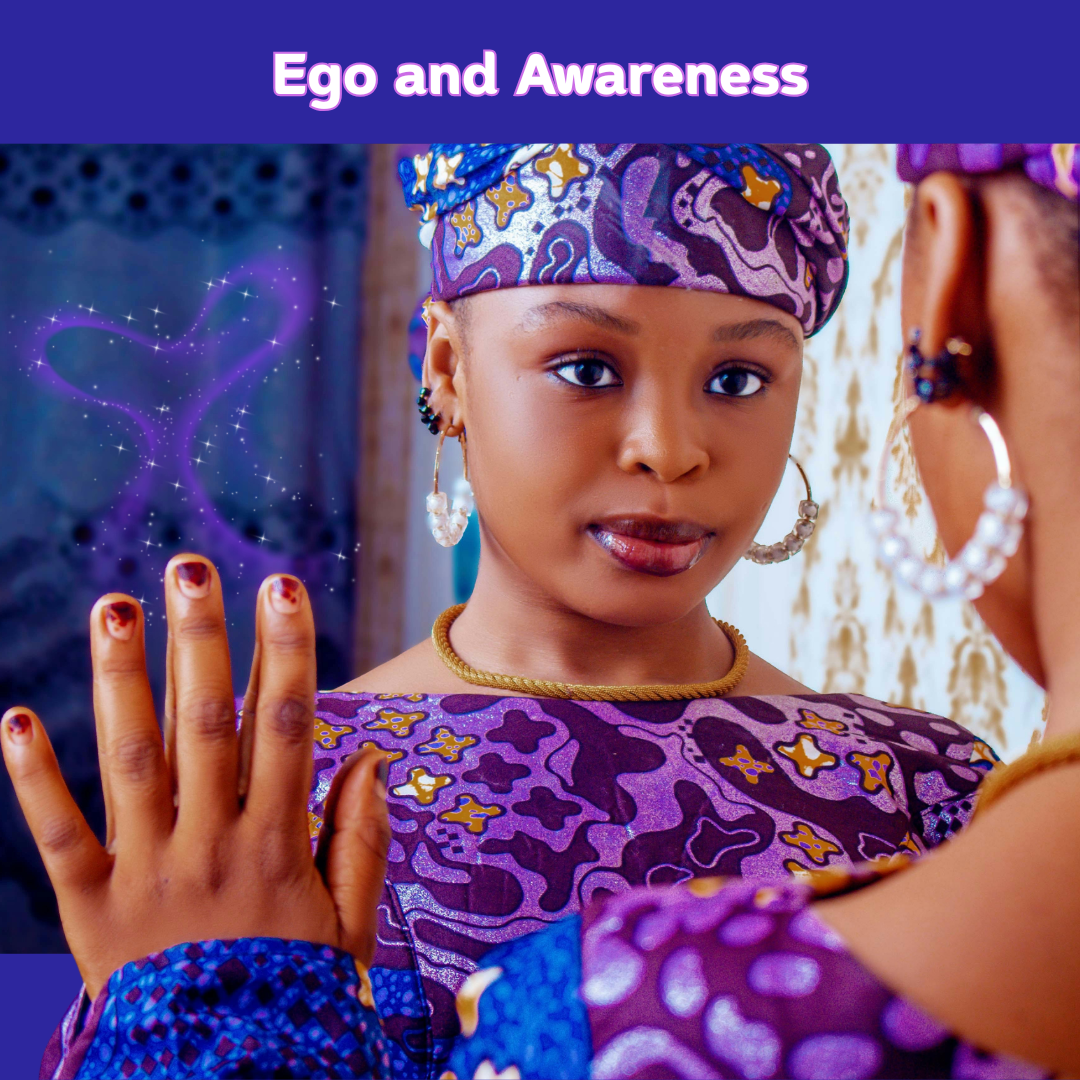
And awakening is not killing the ego, it's seen through it. So, so in other words, the ego is the costume, awareness is the actor.
Awakening is realizing you are the actor, not the costume.
[00:03:35] Speaker A: Well, I would translate to that. The ego's the posturing.
And it is, you know, it. Like I said, it's like it's the animal nature. So what does an animal nature do when it feels any sense of danger? It tries to inflate itself. Like I said, get big like a cat.
So I, I see what they're saying with the costume metaphor.
[00:03:55] Speaker B: So it could be a mask too.
So there's different ways to explain. Well, to go through it.
So ego equals survival, story, roles and protection and awareness equals to presence, witness, stillness and choice.
[00:04:19] Speaker A: Which was interesting because I had both this morning. I was aware my ego was acting up. I was the observer, but I was also caught up in the drama.
I was the actor in the costume, enacting the play, recognizing I was not the player.
It was very surreal.
[00:04:39] Speaker B: So it was like a mix of both things.
[00:04:42] Speaker A: Yeah. So I had enough awareness and discernment yet I was getting, allowing myself to get caught up in the inner drama.
Yeah.
[00:04:51] Speaker B: And I mean, it happens like, I guess when our emotions get the best of us, we just allow them. Because one of the things is we need to let it out. So the only way to let it out is to fully go in and acknowledge the emotions where to see where they're coming from.
[00:05:06] Speaker A: I think that's valid. And I think usually we try to push that away and there finally gets a point where it's like, come on, get real, let's look at this.
[00:05:14] Speaker B: Well, and the more we push it in, the more eventually it's going to just come out. Not the greatest way, because whatever we suppress really comes out with a strong vein, stronger than it was even in the beginning.
[00:05:31] Speaker A: Scorpios know all about that, don't they?
[00:05:33] Speaker B: Oh, yes.
As an awakened Scorpio, I can, I definitely can say I've had all of that, all of the above.
So what is the ego state?
So the ego state can be explained as reactive, defensive, identity driven, story attached, needs validation.
[00:06:01] Speaker A: I Think that's a big one for most people.
[00:06:04] Speaker B: Compares constantly.
So those are just some of the things that belong there. The ego state. I think that reactive, at least for me, reactive. And back in the day, defensive were huge.
And then of course, we can't forget, like, whenever we're attached to a story that's gonna be like, we're gonna hold it on for dear life. And you'll see that played out a lot because people's believes whether might be right or whatever, they're their beliefs. So they're gonna hold on to that story and they're not gonna let go. So that's why.
[00:06:45] Speaker A: Yeah.
[00:06:46] Speaker B: Sometimes it's almost like about analyzing what point am I gonna be wasting my energy?
[00:06:52] Speaker A: And usually if it's ego, it's. The story is I'm the victim.
[00:06:56] Speaker B: Yes.
[00:06:57] Speaker A: They're the bad guys.
[00:06:58] Speaker B: Yeah. Or I'm right and they're wrong signs. You're operating from the ego.
You need to be right.
That's a big one because.
And it's so interesting because I'm not trying to laugh about it, but it's like, in a nutshell, I always think of that saying that like, before you awaken your drunken ego and if you see like the collective as a whole, like the ones that are really acting up, all of these are like bullet points of like, what's happening with them.
So in a good way, it's. It's seeing the situation for what it is. And so you can see when people are reacting from their ego as well to anything in life, because it really applies to anything. If you're just like focusing on your ego, like, that's what's coming out.
[00:07:48] Speaker A: Once again, we go back to the. It's. It's an. It's our animal nature. It's the part of the brain that protects the body. Yeah. So, of course, what does a trapped animal do? It lashes out. It reacts.
[00:07:59] Speaker B: Makes. Exactly.
Which is funny because our next part about operating from the ego is you feel triggered and immediately react.
On this one, I used to take things so personal. I remember before I went into my healing journey, everything was taken personal.
And I can laugh about it now. It wasn't.
[00:08:21] Speaker A: I know, but it's hard not to realize. The world does not, you know, when you recognize the world does not spin around, you talk about. I mean, that's deflating the ego completely.
[00:08:35] Speaker B: It is the other ones, you take things personally, which kind of comes with the territory. Like, yes. Everything you internalize and everything has to do with you.
You feel superior or inferior. So it could be both.
[00:08:54] Speaker A: Yeah. Now, that's the tricky thing with the. One of the tricky things. There's so many tricky things, because you always think it's, you know, in general, it's ego inflation.
[00:09:02] Speaker B: Yeah.
[00:09:02] Speaker A: But we also keep ourselves small because of the ego. Because the ego likes predictability, and it thinks the smaller and more contained you are, the safer you are. So it works both ways.
[00:09:14] Speaker B: Exactly.
You're protecting an identity,
[00:09:20] Speaker A: which is, once again, a mask or a costume.
[00:09:23] Speaker B: Yep.
Ego isn't bad. It's just unconscious when unobserved. So in other words, without being able to spot, can pretty much well play out. And you think that you're, like, just completely just being you, but really it's just your ego, which was interesting because,
[00:09:42] Speaker A: like I said, I was observing it and falling into the reactions, and it was, like I said, very surreal Morning today.
[00:09:50] Speaker B: Yeah.
[00:09:52] Speaker A: Let's go back to how I like to describe the ego before we go in your deeper dive, because we did a whole episode about this in the first season, and it was called ego. The barking Chihuahua. That is my term. I call the ego the barking Chihuahua. Why do I do that? Well, think about a chihuahua. It's small.
It has to have a lot of bravado to survive, so that it barks at everything. You know, that's potential danger. That's potential danger. That's.
It'll bark at dogs three times its size.
[00:10:25] Speaker B: Right.
[00:10:27] Speaker A: And it's all show. It's the costume we were just talking about.
But that's its job, to protect the body.
So when the barking Chihuahua goes on overdrive, which is your ego on overdrive, it's barking at everything, including things that are not dangerous.
And that's why you have to have discernment with the ego. Otherwise the dog is barking at everything.
[00:10:52] Speaker B: And let's be honest, nobody wants it. Dog that barks at everything.
[00:10:56] Speaker A: Right. And so I often tell. Give people this analogy about the ego, and when I do, they get it, because I say, now, people talk about killing your ego. Would you kill your Chihuahua?
And, like, no. I go, what would you do? You train your Chihuahua. Right.
So training the Chihuahua is the discernment we're talking about right now, as well as recognizing that it's what it's doing. It's. It's actually the term I'm hearing. It has a quality. We demonize it, but there is a quality to the ego. The ego's there to keep the body safe. That's a good job.
So sometimes, then I'll switch the dog. I'll say, now think of your ego as a working dog. Like an Australian shepherd.
When. An Australian shepherd. They're so smart and they're so physical.
When they have nothing to keep them occupied, they get depressed.
They need a job. Your bark and Chihuahua needs a job.
So if you start saying, when you recognize that it's acting up, you go, okay, good job. I understand what you're doing. Good doggy. Good doggie. But you're on overdrive right now, so let's stay calm. If I need you for something, I will call you. But right now, we're actually okay. And that calms the dog down. Did I do that this morning?
[00:12:19] Speaker B: No.
[00:12:22] Speaker A: Even though I knew. I know that's a great coping skill. I've used it a lot. Sometimes you just get caught up in the drama for some reason.
[00:12:28] Speaker B: Yep.
[00:12:28] Speaker A: But I just want to throw that out there. I. I'm aware that you can use that as very powerful tool. I have used it as a very powerful tool. There are times when you forget your powerful tools.
[00:12:39] Speaker B: Yep.
So there's different types of ego, and we're going to talk about the three main ones. So first one, there's spiritual ego, which is an example of that is I'm more awakened than others.
[00:12:54] Speaker A: Well, I think it's fair to say that on this podcast, don't you? Because I'm sure people in the audience have observed that themselves.
[00:13:00] Speaker B: Oh, yes.
[00:13:01] Speaker A: You know, without us pointing fingers at anybody. But there gets a point where people seem to be more. More. More show than substance.
[00:13:12] Speaker B: Yes.
But also, I feel like that's just it. Like, a lot of this spiritual ego comes from the lack of working on yourself, because when you're not working on yourself, you're not fully going in and learning and seeing things from a different way. Because once you start seeing things from a different way, you realize that you always want to keep your ego in check. And your ego is one of those things that it always finds sneaky ways to come back to you. And it's so sneaky that it will never come back the same way. That's what's so interesting about it.
[00:13:46] Speaker A: It's mercurial. It's slippery.
You know, it's interesting because when you were saying that, the first thing I thought of as an excellent example of spiritual ego would be, I've done all my shadow work.
[00:13:59] Speaker B: Yeah.
[00:14:03] Speaker A: Or I'm enlightened. Oh, my gosh.
Nobody declares that. That. That's. That's the aggrandizing we talked about earlier.
Because the more you're on the spiritual path, I think the more times People say, the more I know, the less I know, you know, rather than I'm enlightened,
[00:14:24] Speaker B: I like to always say, like, I'm a forever, forever student of life because I'm always learning.
There's not, there's never a time where you're going to know it everything. And even when you do think you know it everything, that'll just, you just go into another step. And then you start seeing everything so differently that it's almost like going back, except from a broader perspective.
[00:14:48] Speaker A: And since our podcast is about the spiritual path and that's the topic you're on right now, one of the other things I've noticed is that because people get trained in certain philosophies, I'm going to say to help them to expand and grow.
I think part of the spiritual ego is assuming that the way it worked for you is the only way that works.
[00:15:16] Speaker B: Yes.
[00:15:17] Speaker A: So you find people pushing certain things, like, you know, transcendental meditation, for example, on you. You know, yeah, it was great. It was wonderful for you. But is it wonderful for everybody? And then there get. The ego comes in by. Because you can see these people who are guide. This is the only way.
[00:15:35] Speaker B: Yeah.
[00:15:36] Speaker A: And so that's, that's another trap to watch out for on the spiritual path is when some, somebody's trying to tell you this is, this is the only way. You'll never get, you'll never get to your spiritual goals without this.
I've seen that too.
[00:15:52] Speaker B: So if you see that, that's a warning sign of go away. Like, don't. Like, you have to find somewhere else to get your information from because that's not going to help you.
[00:16:01] Speaker A: And I think they're, well meaning. They don't think, they see that they're talking from ego, but the outsider can see it.
[00:16:07] Speaker B: Yeah.
The next one is victim ego.
Life is happening to me.
That one's big.
[00:16:17] Speaker A: That's what I experienced this morning. I was in full blown victim ego this morning.
And I do know that I grew up with that. So it was hard because I recognized I was actually emulating my martyr mother. And I don't like that one bit.
[00:16:35] Speaker B: Well, here's the thing. One of the things I realized on my own journey because I came from the same background as Lola, like, we both have really martyr moms and without realizing whether we want to admit it or not, that martyr ism, like, there's no way you can grow up your whole life with it and you not have part of it. Like you're, as you go on your spiritual Awakening, you're more aware of it, so you catch it. However, there's gonna be parts of that that go through you, and it's part of the healing. Like, as you heal, you start catching it. You start removing different layers from it. And that's totally normal. And the reason why I'm bringing this up is because it took so long for me to work on the different layers. Because when it comes to your parents, it's just the way you're dressing. It's so many layers. Because it's just you had your whole childhood growing up with them, and they did their best, and sometimes, like, their actions spoke louder than words.
[00:17:37] Speaker A: And it's what you know, growing up.
[00:17:39] Speaker B: Yes.
[00:17:39] Speaker A: And you think as an adult, you will not fall into that pattern. But because you know know it, you actually do fall into that pattern. Like I did this morning. And the way I've heard it phrase before is like, yeah, it's a monster, but it's my monster. Yeah. You know, I know it. This is. This is how I'm comfortable operating because it's what I've seen mirrored all my life.
[00:18:02] Speaker B: Yep.
[00:18:03] Speaker A: That said, you can break out of the programming, and I would say 90% of the time I do, but I fell into the trap this morning.
[00:18:09] Speaker B: Oh, yes.
And that's perfectly normal. See, the other one that's really big with ego is the savior ego, Especially
[00:18:16] Speaker A: on the spiritual path.
[00:18:18] Speaker B: I need to fix everyone.
Man, that savior ego can really mess things up for you. Me personally, until I realized it, all of my previous relationships were all based on the savior ego.
One of my friends put it, like, in the best words I could ever explain. And he said, it's almost like you go look like there's people and there's everyone, and then you go look for the broken toys to fix them.
I did.
As a result, I obviously did not succeed in those relationships. But did I learn lessons? Of course.
[00:18:57] Speaker A: I see that with a lot of women I've known, too.
[00:18:59] Speaker B: Yep.
[00:19:00] Speaker A: And then on the spiritual path, you still want to save them as well.
Excuse me? Like, I'm feeling so much better, you know, because I've done my shadow work. So now I gotta. I gotta tell everybody about it, you know?
[00:19:12] Speaker B: Yeah.
And it's the same thing as with religious beliefs.
I happen to have friends. There are still. Obviously, a lot of them are still in. Have religious beliefs that they feel really strong about. But see, here's my thing. I am not battling. It's like what you believe, what your core beliefs are, like, those are yours. And then you just have those and I have mine. And I'm not gonna necessarily change my beliefs just because you have different beliefs than I do. But at the same time, my thing is, I used to get triggered by the. Even the word savior because of the fact of religious programming. It was just. I don't. Like, I just felt so much like it was a word that gave your power away so easy.
But I had to learn that. And before that, if somebody would have been, like, asked me, like, oh, who's your savior? I would have just, like, give my power away too. Like, we are all part of growth. Like, it's not.
I grew up religious, but at the same time, the moment where I started to parting ways from those thoughts was the moment that I realized that those religious beliefs were intended to put me in a box and I couldn't fit in that box. And that's where, like, growth really started for me because I realized that I needed to seek outside of that box because I didn't belong to that box anymore. And that's okay. Like, and if you're going through it, and especially during your spiritual awakening, there's. There's a lot of layers to your indoctrination.
And just in general, for, like, things like when you're trying to.
That savior complex can really take a toll on all of us if we're not aware of it.
[00:21:04] Speaker A: And probably most. Most of the total is taken on the person who's trying to do the saving.
[00:21:09] Speaker B: Yes.
[00:21:10] Speaker A: Yeah.
[00:21:10] Speaker B: Because the other person, clearly, they're perfectly happy where they're at, unless they are choosing to.
[00:21:16] Speaker A: Some people are happy to be miserable.
[00:21:18] Speaker B: Yes. Because that's their set point. That's another thing that I've learned is that everyone has a set point.
So your set point means what you're comfortable with and what you've experienced so far. That's where you're at. It doesn't mean you can't change that set. Set point, but wherever your set point's at, that's what you're tolerable of, and that's what you feel comfortable in. Anything out of that comfort zone is gonna probably trigger you just like it did once upon a time to me too.
But it's. That's part of the growth is that we're all evolving by. By really facing our trigger points and seeing what. What is hidden that I'm not seeing.
And that's where it makes the difference.
All right, so now we're going to go into the awareness state. So what is the awareness state?
Awareness state feels like spacious observant.
Nonreactive, compassionate, detached, but loving, present.
These were so big for me. Like, I. This was like. If you would have told me this when I even. Well, even when I started my spiritual awakening, it was like a world I did not exist in because none of them were me.
[00:22:44] Speaker A: Did you notice those are all very feminine traits?
[00:22:46] Speaker B: Yes.
And, you know, the thing is, for me, the one that hit the most, like, there was, like, so big that I've really had, is detached but loving. Because even now, I have to detach a lot of the times because there is people still in my life that are very much on victimhood, and I can love them from far, but I cannot no longer play in that energy because that energy feels a huge discomfort for me, because why would I want to go back to the past?
And it really plays a trick at first, because when you start learning that you want to detach from but not. But still be loving, you almost feel like.
Like a lot of your. If you have. Like I did, I have other parts that really triggered me because then I felt like, oh, well, if I don't. If I have detached from these people, I'm not helping them. If I'm not helping them, I should be feeling bad or something.
[00:23:54] Speaker A: You think you aren't loving them.
[00:23:55] Speaker B: Exactly. And it's just. It's. It's such a loop, because being in an awareness state is really being in that place where you're just.
You've realized that you can only be responsible for yourself, and you need to allow others to be the same.
[00:24:16] Speaker A: Yet society teaches and trains us for enmeshment.
[00:24:20] Speaker B: Yes.
[00:24:22] Speaker A: Which isn't love.
[00:24:23] Speaker B: No, it is very much not.
[00:24:26] Speaker A: We think it is, though.
[00:24:27] Speaker B: Mm.
I always have a little.
A thing that I share with people because.
So when I go back.
Because originally I grew up in Mexico. When I go back in Mexico, you know, like, every time you go to other countries, the poverty is more present. And how the poverty is more present is usually like, there's a lot of people begging for money and stuff, and even here, there's people begging for money. Right.
But I realized that even me being around poverty, it wasn't about the poverty. Had to change so that I can be okay with it. What it was, it was. I needed to change my mindset on it, because even if people are going through a rough time or they're, like, currently in a certain situation, that does not mean that they can't race out of that situation. So I would always remember helping them. And as I help them, I always set the energy of.
I have so much faith in you, and I know that you can do so much better. And this is me acknowledging you as an equal and with all the chances out there for you to be in a better spot. And when you think that way, it really changes the energy. And not only that, but think about how egotistical it is when you're like, the worst thing you can do is feel sorry for someone. Because when you're feeling sorry for someone, you're putting yourself higher than that person.
[00:25:54] Speaker A: The ego we just talked about.
[00:25:56] Speaker B: Exactly. And that's like, that's why I wanted to share that story, because that's story was really, like, profound for me. And what I do when I travel to these places, there, there's a lot of poverty. I had to change the way I was seeing it, otherwise I would want it to be the rescuer. And even at that, like, for example, when we go, and I go with my husband, if my husband sees a kid, it's done. Like, that's his, like, weak spot. Like, because the thing that he doesn't like, I. I've explained to him many times that these kids are working not because they want to work. It's because their parents, a lot of the times put them to work. And the reason why they're like a kid comes up to you, and of course you want to buy them everything because you're like, thinking, oh, that way I can get him out of working.
But it's like, maybe it's for that day, or maybe even like, the parent realizes and it just gives them another. So there's so much to it than just what meets the eye.
So I think awareness is more for. For me, awareness is more about stopping and observing and truly, like, holding that space, but allowing the world to function as it's functioning and putting your part to make it better. Not in a way of judging it, not in a way of making it feel like making people, like, feel a certain way. It's more about you knowing that everyone is functioning off of what they haven't healed yet.
Signs. You're in awareness.
You can feel a trigger without reacting.
That.
[00:27:28] Speaker A: That's a big one. Yeah, but that, that's hyper awareness.
Like I said, I didn't pick up on it today. So
[00:27:40] Speaker B: I love.
[00:27:41] Speaker A: I would like to say I'm always like that.
[00:27:43] Speaker B: Okay.
I love triggers because they point out a place where there's more work to be done.
[00:27:50] Speaker A: Yes, they do.
[00:27:51] Speaker B: I just got triggered. When was it? Like, yesterday. And I had to wait to really address it till today because I have
[00:27:58] Speaker A: to Go to work.
[00:27:58] Speaker B: So I had no option to address the trigger until today. But today I did address it, and I was very grateful to get to, like, where I needed to. But it's part of that sometimes when we get triggered, it depends on the trigger, too, because I think that some of them, like, just make us feel uncomfortable, and some of us just makes us feel like.
[00:28:19] Speaker A: And others are just surprising because there have been times you've been comfortable with it, you think you're okay, and then all of a sudden, it punches you in the gut. Like me this morning. It's like, really?
It's like, I've worked on this. I mean, it's like it's come up before, and zowie. Today I couldn't. I just didn't have the emotional wherewithal to.
To not allow it to expand.
[00:28:47] Speaker B: Yep. But see, you just brought up a good point.
So we all have tools that we can use. However, sometimes our emotions get the best of us, and then sometimes we have to let those emotions out before we can even go into our tool set or even remember what our tool set is. Because the emotion is so, so strong at the time that it doesn't allow us to see clearly, to think clearly indefinitely. How to. But another thing, too, that a friend of mine told me that I always remember is the goal was never perfectionism. The goal is balance.
[00:29:23] Speaker A: I'm the one who told you that.
[00:29:25] Speaker B: Well, that.
[00:29:26] Speaker A: But the thing is, I was not balanced this morning.
[00:29:30] Speaker B: But when I first started my journey, my biggest setback was because I grew up in a household with everything I thought I needed to do, everything perfect. So that was a huge clutch on me as far as moving in life, because nothing is perfect.
So then, by having the balance, as long as you, no matter how affected you are, you can take the time and bring yourself back to awareness and bring yourself back to that calm state. That's all there is to. That's actually you technically mastering. Because balance is mastery.
[00:30:08] Speaker A: Yeah. And I'm more balanced now.
[00:30:09] Speaker B: Yep.
[00:30:10] Speaker A: But, boy, I really definitely fell into a trap this morning.
[00:30:15] Speaker B: That's good. I'm sure a lot of people do it.
So another sign you're in awareness is you observe your thoughts instead of becoming them.
That's so true.
Or you just wait before you react to things.
I used to be awful verbally. I would not. Like a scorpio is the worst when it comes to.
Like, an unhealed scorpio. You don't observe, you just lash out, Especially when you're unhealed. And I mean, I can admit to that now.
I'm no longer there, and I no longer do those things. But have I done them? Of course I have.
And so it wasn't pretty.
That's probably why we're so disliked in the zodiac sign. I swear.
[00:31:03] Speaker A: Well, Gemini's, too, because the nasty twin can come out.
[00:31:06] Speaker B: Yeah.
[00:31:07] Speaker A: We both have very much maligned signs.
[00:31:12] Speaker B: Yes.
The next thing is of signs of awareness is you can hold opposite perspectives.
[00:31:21] Speaker A: I can do that because I'm a Gemini, actually. That's one of the gifts. I think people think we're psycho, but we can do that.
[00:31:29] Speaker B: Yeah.
[00:31:30] Speaker A: And I didn't realize till I started studying metaphysics and tarot, because the tarot cards are aligned to certain zodiac signs. Like, certain signs simply don't have that skill. It's something that's very, very difficult for them. So I have more empathy for, like, the cardinal signs now because they're very much, this is it. This is the only way.
So they have a very. It's very challenging for them to do what you just said.
[00:31:58] Speaker B: And it's interesting, too, because I just find this human experience so interesting, because even when we're born in certain ways and we have certain attitudes based on, like, obviously, like, our horoscopes and our astrology and everything, and we came to master certain lessons, and that doesn't mean that on your next lifetime, you're not going to be something different, and then you get to explore.
[00:32:19] Speaker A: Well, you will be something different because you want to expand.
[00:32:21] Speaker B: Exactly.
[00:32:22] Speaker A: All right. I did the Gemini thing last life. Let's see. Where's my next challenge? Is it emotional? Or is it that I need to love the body more? Or is it that I need to funnel my willpower and be fiery?
[00:32:38] Speaker B: Then our next one is of the signs of you're in awareness. Is you choose response instead of impulse.
[00:32:47] Speaker A: Yes. I would agree with that completely.
And once again, I know that I went tripping down the ego trail this morning.
That's okay.
[00:33:03] Speaker B: So in other words, the way to phrase it is awareness doesn't eliminate emotion. It holds emotion without drowning in it.
[00:33:12] Speaker A: You know, now we're talking about something that I didn't really know the term for until I saw a video this week. Metacognition.
And metacognition is like, let's say. Let's say you're upset. Okay.
Metacognition is saying.
Instead of saying I'm upset, it's. I'm observing myself being upset.
[00:33:36] Speaker B: Oh, that's good.
[00:33:37] Speaker A: So you become the observer.
[00:33:38] Speaker B: Yeah.
[00:33:39] Speaker A: Or I am recognizing that this is someone who's upset or this is someone who's acting out. So you take that one step away from being totally caught up in it. And I think it's a brilliant concept and I was actually using it today as I was getting calmer. It's like, okay, I'm observing my emotions. I'm observing that I am someone who is thinking this way. I'm observing someone who thinks she's feeling this way, blah, blah, blah. It's actually an excellent tool. So if you guys do not know, because I didn't metacognition, you might want to look into it.
[00:34:14] Speaker B: Yeah, that's cool. Thanks for sharing that. I'm sure that will help a lot of people.
So another thing that's really cool that it's like really powerful is how sovereignty ties with awareness is. Awareness is reclaiming your inner authority, which is in obviously sovereignty.
[00:34:36] Speaker A: Isn't it funny though because like when you're reactive you think that's how you claim the authority. That's the, that's the only way to do it. Right. Assert myself. Yeah, but awareness is actually the way. Yeah,
[00:34:51] Speaker B: I had someone, I posted something about just keeping peace with current events and I'm not going to go into what it was, but somebody posted on the comments but we must resist. And I'm, and I was just thinking like immediately my thought was like resist, persist things. But then I'm like, no, I'm not going to go there. I'm just going to allow it.
Just let it go.
[00:35:13] Speaker A: Yeah, I think, I think hopefully they were saying resist, but hopefully they were thinking non participation because that's different when
[00:35:23] Speaker B: it's just everything is energy. So it's just how you put your energy yout can't say you want to get rid of a fire using fuel on it because that doesn't work. It's like if you're using the same energy to get rid of something, it's not going to work. You need to be the change.
[00:35:38] Speaker A: But if you withdraw your energy from it, that's very powerful. And people don't realize that.
[00:35:44] Speaker B: Exactly.
Well, I hate to break it but I mean we know that our society as a whole has taught us not to have power. They're taking away our power. That's how they control people.
[00:35:56] Speaker A: I know, and that's why people are upset now and so and, and rightfully so.
But I've had 20 years of conspiracy theory familiarity and the to me I understand, but where the anger is coming from because that's part of like it's like a grief process. You go through when you're going through all this stuff.
But it really does seem to me like if you're giving your energy to something that harvests your energy, it's kind of counterproduct if you withdraw your energy, that's a different tact.
[00:36:38] Speaker B: Yeah.
So let's. This is a good, really practice. This is our excellent practice for discernment practices.
So when like think about this as concepts. So who is speaking right now?
My wound or my wisdom? Things to ask yourself.
Because a lot of the times when we're talking, it takes a second to just realize, is it my wounded speaking or is it like my wisdom? Like, is it truly like something that I'm being hurt by that's speaking or is it like something that I want
[00:37:19] Speaker A: to
[00:37:22] Speaker B: that has more wisdom?
The second one is, am I reacting or responding?
[00:37:30] Speaker A: Yeah, we've been talking about that consistently.
[00:37:33] Speaker B: Yeah.
And then this last one is, is this contraction or expansion?
[00:37:42] Speaker A: Yeah, that's a good one.
[00:37:44] Speaker B: Yeah. Because you can definitely.
[00:37:45] Speaker A: You can feel the contraction when you're, when you get up in arms and.
[00:37:48] Speaker B: Yeah.
[00:37:49] Speaker A: Or something scared or.
[00:37:50] Speaker B: So anytime you're having a conversation with anyone, it can be about anything. The moment you start feeling like you're contracting, like you're getting worked up, that's
[00:37:59] Speaker A: the moment the contracting means feeling smaller. It's almost like you make yourself smaller out of protection. Yeah, yeah.
[00:38:07] Speaker B: So things just to keep in mind.
And as far as body indicators, ego feels tight. So whenever you're. I'm in that ego, it feels hyper vigilant.
[00:38:19] Speaker A: So yeah, that does feel tight. Yeah.
[00:38:22] Speaker B: And awareness feels as spacious.
So expansion. Spacious.
And awakening isn't constant awareness.
[00:38:31] Speaker A: No. Because that's hyper vigilance as well.
[00:38:33] Speaker B: Exactly.
So in other words, awakening comes in waves.
Because I mean, you're here to feel the emotions. Of course you're going to feel all the emotions.
You will still get triggered because that's just the nature of things.
And integration is transcendence.
Integration is very interesting to me because I had to learn it the hard way. I thought the way was like, go as fast as possible.
And I thought integration would just kind of catch on to things. And clearly that was not it at all.
And then my body finally started like being mad at me and I was like tired and done. And then when I finally.
That's why a lot of the times when you go and you do these like extreme healings and stuff. They even say in those extreme healings, sometimes the most powerful time is like when everything's silenced and you get that time to Recuperate. That's when the true wisdom and true things come to you. And it's so true.
[00:39:37] Speaker A: And once again, very feminine. Isn't that?
[00:39:39] Speaker B: Yeah.
[00:39:42] Speaker A: Okay, well, would it be okay if I talk about what I found out on my research, or do you have a few more things you want to add?
[00:39:48] Speaker B: I was just going to add a few more things.
In other words, so you don't lose awareness. You forget it, and then you remember again.
That's how it does, the little wave thing.
[00:40:00] Speaker A: Yeah. Well, that's a good way for me to justify my feelings. This morning, I forgot it.
[00:40:05] Speaker B: Exactly. You just forgot it. It's okay.
So the final questions to go with is just these two questions.
Where in your life are you still protecting an identity?
And where are you being invited into deeper awareness?
I like those.
[00:40:30] Speaker A: That's good, because I like to think in archetypes.
And so the archetype that came through to me was the punk rock girl, teenager archetype, you know, and the, you know, f you to the whole, you know, system.
[00:40:42] Speaker B: Yeah.
[00:40:43] Speaker A: So that. That works really well for me. I don't know if everybody likes to think the way I do or, you know, I like, like, think of, like, I'm getting up in arms like a Valkyrie or something, you know, or, you know, I'm. I'm Diana. You know, it's like I. I love archetypes. They. They help me with my healing.
Okay, well, I want to talk about some things that I looked up, and this is just practical stuff for you guys to know, because I asked for some signs that your ego's in the driving seat.
And I know Amaral touched on some of the things. They might sound familiar, but let's go through the list that I was given.
Number one, urgency spikes.
You feel like something must be said, it must be fixed, it must be corrected, and it must be defended immediately.
Yeah.
Now, that's definitely ego, because it's, like, all about me, all about now, all about. I'm important. This is important. I don't care what you think.
Yeah, any. Anything you want to say about that?
[00:41:50] Speaker B: I think it's pretty clear.
[00:41:52] Speaker A: Urgency.
Okay. Number two, you are narrating instead of noticing, which noticing would be the awareness we just talked about. So you have an inner. Inner monologue, and it's loud, and you might be using words like they always, or this is so typical.
I can't believe.
[00:42:15] Speaker B: Yeah.
[00:42:18] Speaker A: So narrating is telling a story. Right.
So I think they always is probably one of the biggest ones. It's always them. It's always they're the problem. It's not me. Listen to me. Point out what a problem this all is, and I'm the little golden angel in the room, you know?
Yeah.
Okay. Or my. I'm hearing in my head why it's all. Why does it always have to be this way?
You know?
[00:42:50] Speaker B: Yeah.
[00:42:51] Speaker A: All right. So a third sign that your ego's driving is that you need to be right.
You don't need to be accurate.
You need to be right. Yeah.
He's laughing because I can just see the wheels turning in your head. How many times we've encountered that or.
[00:43:12] Speaker B: Yeah.
[00:43:12] Speaker A: Or in the past, been that way ourselves, especially when we're growing up in a society that often wants to create division. That's not really there.
[00:43:20] Speaker B: Yep.
[00:43:21] Speaker A: So that you get the blue and the red fighting, for example.
That information isn't always accurate, but, boy, do they fight to be right.
[00:43:30] Speaker B: Oh, yes.
But then it becomes pride, which is so crazy. Once pride is involved, there's no winning because now it's like, it's a waste of energy.
[00:43:42] Speaker A: But they don't think so when you're all charged up with ego, it's like, I'm gonna win this battle even if I have to make up facts.
[00:43:53] Speaker B: And they sure do that.
[00:43:55] Speaker A: Or project things. That's probably the most. That's probably more accurate. Project things onto you or other people.
Okay. What's another sign that the ego's taking over? Well, it's somatic. Your body tightens up. You just talked about that.
So what could tighten up your jaw, your chest, your stomach, your shoulders?
So I've done all of that. Your jaw clamps up. Right.
It's interesting because, like, in meditation, even if you're calm, they tell you, loosen up that jaw. That's one of the first things someone tells you when you're meditating, right?
[00:44:30] Speaker B: Yeah.
[00:44:31] Speaker A: So even when you're calm, you're clamping that jaw, you don't even realize it.
Chest. Sure. Stomach. You get those. You get that sinking feeling in your stomach. And then the shoulders is another one that oftentimes in meditation, they tell you, all right, now drop your shoulders an inch.
Because we don't realize how high we're carrying our shoulders all the time. We're always in this hyper vigilant state. State. Somatically, we don't realize it until someone says, drop your shoulders. Like, oh, my God, they were way up around my ears.
So you don't even have to be in a hypervigilant state to have that happen.
[00:45:08] Speaker B: Yeah.
[00:45:09] Speaker A: Okay. So that's What? I mean, the ego is always on alert. It's always scanning for danger. That's probably why our jaws naturally tighten and our shoulders naturally rise.
Okay, so another one is that you're rehearsing conversations in your head over and over and winning imaginary arguments. Yeah, I'm an expert at that.
I think that's another Gemini trait. You know, it's like, even before you go meet see somebody you're playing, I could say this. I could say that they could react this. They could write that. I'm gonna be ready to say this. I'm gonna be ready to say that.
And also, in hindsight, we do that all the time, don't we?
[00:45:47] Speaker B: Yeah.
[00:45:47] Speaker A: Oh, if only I'd said that, that would have really gotten them. And we love that feeling.
[00:45:52] Speaker B: Yeah.
[00:45:52] Speaker A: It's like, even though you didn't say it to them. Oh, if I had said this, oh, wow. I would have really gotten one up on them. Oh, doesn't that feel great in my body now? I'm so smart. I'm so clever.
Ego.
[00:46:04] Speaker B: Yeah.
[00:46:06] Speaker A: Anything you want to add on any of the things I just mentioned?
[00:46:09] Speaker B: No, I think they were pretty accurate.
[00:46:11] Speaker A: There's more.
Okay. So another sign that the ego's acting up is that comparison creeps in.
And some of the quotes I was given, this applies to something we talked about earlier. I'm more aware than they are, or they just don't get it, or I've done more work, so I know.
[00:46:37] Speaker B: I still can't forget that time where I was talking to a friend, and I'm not going to mention any names, of course, but she has been a lot longer in the spiritual awakening and stuff. And I was asked. I think we were just having a regular conversation about certain things, and she started using terms as well when I was still going through the things that you're going through when I was at your level, like, and she actually said level, and I was like, huh, Interesting.
[00:47:08] Speaker A: Yeah.
Yeah.
And then I was thinking about comparison because, like, my sister was always comparing herself to other people growing up and falling short.
[00:47:19] Speaker B: Yeah.
[00:47:20] Speaker A: And that's ego, too. We talked about how it aggrandizes and how it makes you feel shrunken and smaller, too.
[00:47:26] Speaker B: Oh, yes.
[00:47:27] Speaker A: Okay. Another sign is that you feel threatened, but you can't name any real danger, and that's because your identity feels challenged. The mask, the costume you talked about earlier, it's like, I've got this Persona. I've built it up. You know, it's like a real big thought bubble for me. And you just. You Just don't you dare try to burst my thought bubble.
[00:47:50] Speaker B: How dare you?
[00:47:52] Speaker A: It's my false Persona.
[00:47:55] Speaker B: Yeah.
[00:47:58] Speaker A: Okay. Another sign is that you're defending a story about yourself, and the example they're using is like, I am not that kind of person.
[00:48:07] Speaker B: Yeah.
[00:48:08] Speaker A: And that is not who I am.
So that sounds like superiority in a lot of ways. We kind of covered that just now, didn't we?
Okay. Another sign is that you want validation more than you want understanding.
You want someone to agree with you, not explore with you.
[00:48:28] Speaker B: Yeah.
[00:48:29] Speaker A: Ouch.
That is so true.
[00:48:35] Speaker B: That is so true.
[00:48:37] Speaker A: I think I don't even want to expand on that because it's so obvious.
Yeah.
So the final one that says that the ego's in the driving seat is that there's heat, there's righteousness, there's defensiveness, there's subtle superiority. Ego feels hot or tight.
[00:48:54] Speaker B: Yeah.
[00:48:56] Speaker A: Okay, so what are some of the signs that you've become aware that awareness is present.
Okay. Very much like what you talked about. First one on the list. There's a pause, even a microsecond of space before you react.
[00:49:12] Speaker B: Yeah.
[00:49:14] Speaker A: Number two is you can actually say the word. Maybe.
Maybe I'm missing something.
Maybe this isn't about me.
That one's pretty obvious, too.
[00:49:33] Speaker B: Maybe they're projecting on me.
[00:49:37] Speaker A: Maybe I'm wrong.
Oh, no.
Okay. Another one is that curiosity replaces certainty, so you actually can stop and go, wait a minute, what's happening here?
Where am I going with this?
So curiosity over certainty. I like that.
Yet another sign that the awareness is showing up is that your body does soften, even if it's slightly. So your breath might deepen, your shoulders might drop, things like that.
Okay, here's a really good one, guys.
How did a good sign, you know, awareness is coming in.
You don't need the last word.
Yeah.
Isn't it funny? Because so many people, like, you'll have an argument and finally, like, the last word is like, so there. I mean, they still try to get their last word, you know, something totally meaningless. Like, so there.
[00:50:37] Speaker B: I've actually was one time the presence of an argument where somebody literally said to the other one, just because you say the last word doesn't make you right.
I just, like, started laughing because it was going on for so long, and I was just expecting it to end. And it's just like, it's really true because there is some people that need to have that last word. But that last word doesn't make you right either.
It just makes sense.
[00:51:07] Speaker A: No, but that's the Ego, it wants.
Even if it's something that is almost nonsensical. Yeah. Okay. So another sign that awareness is now in the driver's seat is that you can hold two truths at once, which.
That's a good example. You have your perspective. We're arguing. I have my perspective. You can have your truth, and I can have mine. And now let's go have some ice cream.
Can we be friends again?
Some people will not.
Not go with that. Others will. Right.
[00:51:39] Speaker B: Yeah.
[00:51:40] Speaker A: Another set that awareness is coming through is that you can feel emotion without becoming it.
And that goes to, like, the metacognition that I talked about earlier. You're aware of it, you can feel it, but you're not identifying with it.
[00:51:55] Speaker B: Yeah.
[00:51:57] Speaker A: Okay. And then the final one on my list is that you are willing to revise your stance.
[00:52:06] Speaker B: Yeah.
[00:52:08] Speaker A: And then also to keep in mind that awareness feels spacious, which is what you talked about earlier too.
So the most important distinction that in my notes are that ego says. And I. This is the bark. And choal. Ego says, this threatens me.
Awareness says, this is information or data.
Mm.
Very different.
So one of the things I was also advised to point out is that calm. Being calm is not necessarily awareness, because sometimes you can be dissociated.
[00:52:48] Speaker B: Exactly.
[00:52:48] Speaker A: And appear calm.
Silence does not mean transcendence, because sometimes you can be frozen.
[00:52:57] Speaker B: Yeah.
[00:52:58] Speaker A: So that's something that's important.
And ego contracts, awareness expands. So just keep that in mind. That goes hand in hand with what you talked about earlier too.
So we've got a few more minutes to talk about the ego, and, you know, I'm at least glad I can laugh about it at this point. It still feels. I still feel a little bit up in arms.
I still feel a little bit vigilant. I still feel like my ego wants the last word.
[00:53:32] Speaker B: Yeah.
[00:53:34] Speaker A: But. And. And. And it's not getting it.
So it has been cathartic for me to go through these lists and, you know, even though you had no idea I was having an ego flare up today, this. This is the timely message for me.
What do you want to say about what we've talked about?
[00:53:55] Speaker B: Well, I think it's.
It's great to go back and kind of, like, really check ourselves because, I mean, we've all been in probably, like, every single thing about that describes the ego once upon a time. And same as we've gone through also being more in an awareness state.
And what we talk about, it's not about a pointing finger. It's about realizing, like, opening up awareness of what is which and how sometimes when we react to things like we can be in certain parts. And the main thing that I'm like that I feel that it's good for people to pick up on this episode is the fact that when you're always on your ego, like when you're constantly, like not being expensive and just more like being tense, you're gonna drain yourself out more. So this is also a coping mechanism of how to be more at peace with yourself and how to check yourself so that that way you are doing things that are going to be more of beneficial to you, for lack of a better word, rather than drain you out. And this is part of exposing what the.
Just the. Like how everything that we. Everything we have to face every day because at any given point we can choose to be in our ego, we can act up on ego, but again, we can visit something, but doesn't mean we have to live there.
[00:55:25] Speaker A: Right. And that's what I think the whole trajectory of this information that you got and I got was about. It's like, yeah, you can choose to identify and get embroiled into it, which I did, or you can observe it.
[00:55:42] Speaker B: Exactly.
[00:55:43] Speaker A: Okay.
[00:55:44] Speaker B: You always have a choice.
[00:55:46] Speaker A: Well, we just got a couple minutes left and I don't want to forget to thank our friend who helps us with our audio every week. Thank you. Mixed by Bruce.
[00:55:55] Speaker B: Yes, thank you, Bruce.
[00:55:56] Speaker A: Some people complained about our sound being a little too tinny or quiet.
[00:56:02] Speaker B: Yeah.
[00:56:02] Speaker A: And he came to the rescue. So we do appreciate your work. Yes. And we highly recommend him for. For anyone who does podcasts or any works with music.
[00:56:12] Speaker B: Yeah.
[00:56:13] Speaker A: And then if it's okay, I'm gonna put out a promotion for me too here today because I would love to offer my services to the people in the audience. And I have a website, lola singer.com where you can see, you can book tarot readings, you can book getting a spirit guide, you can get intuitive sessions.
The reason I'm bringing this up because for the people who listen to Woowooville at checkout, if you. You get a discount.
So if you put in capital Woo, 25, you get a 25%. Oh, no. Yeah, 25 right now. Woo. 25, you get 25% discount on my services, so please take a look.
I feel like I do good work and I would just love to talk to more of you people in the audience.
[00:57:02] Speaker B: She does amazing work, so don't miss out. Thank you for tuning in and don't forget to share it.
Bye Bye.