Episode Transcript
[00:00:00] Speaker A: Welcome to Woowooville, the next stop on your spiritual journey, hosted by two fellow travelers who found a soul connection on the path to higher consciousness.
Our goal is to help you navigate the choppy waters you're likely to encounter on the spiritual path by sharing our experiences with you each week.
Join us as we spill the tea on what it is like to wake up to your authenticity self.
Well, hello, I am Lola Singer, and I am with my compadre.
[00:00:34] Speaker B: Hello, my name is Emeril.
[00:00:37] Speaker A: And maybe just a little reminder about the podcast that we found each other through synchronicities.
[00:00:46] Speaker B: Yep.
[00:00:47] Speaker A: At some spiritual events in our area and became friends and wanted to bring a podcast together for people who are new to the spiritual journey because it certainly has its ups and downs.
[00:00:58] Speaker B: Exactly.
[00:00:59] Speaker A: And Amarl's new to it. I met him at the beginning of his spiritual journey.
So, you know, and it's not a race to the finish. So he. He goes through things, I go through things. We help each other. And that's what we wanted to do on the podcast, help the people in the audience. When you're going through situations, we go, wait a minute, if it's all love and light, this shouldn't be happening to me. It's like, no, we're going to normalize what does happen for you.
[00:01:23] Speaker B: So, yeah.
[00:01:24] Speaker A: And that kind of leads into part of what we wanted to talk about today. So we're looking at one. Well, I'm going to use the F word, failure, as one of the things we're going to talk about. So what do you want to tell them about that? Because you're not failing if you're. If you're. Everything is not love and light all the time.
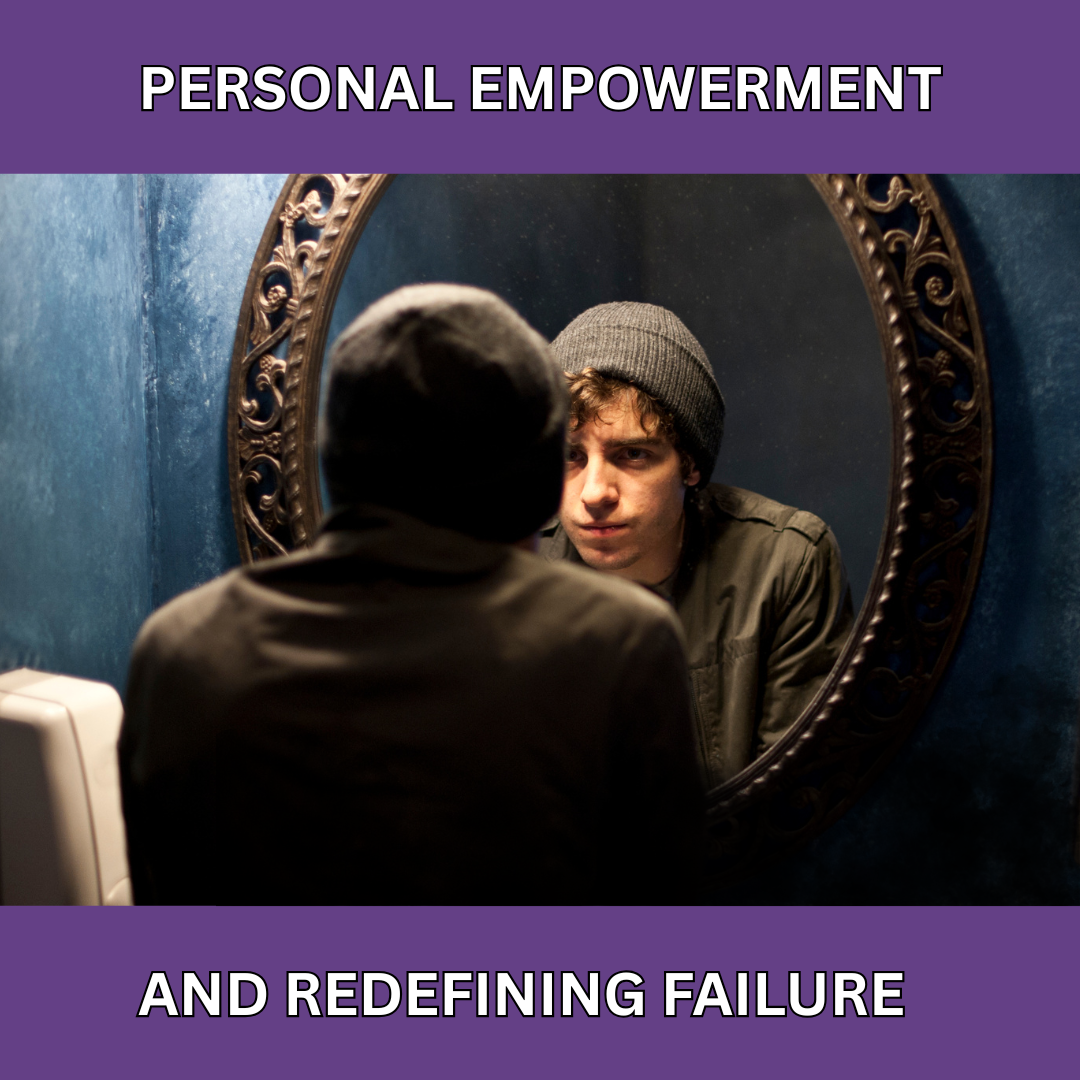
[00:01:42] Speaker B: Exactly. So the name of our episode today is Personal Power and Redefining Failure because. And we. We feel these two things go hand in hand because we have power.
But also sometimes when we redefine failure, we've learned that it's more about the learning aspect of it than really the self judgment or the judgment by others that we feel that we think it's failure when it's really not.
[00:02:14] Speaker A: No. It's like we were talking before the podcast about how oftentimes when you're about to have a big breakthrough, everything seems to be crumbling apart.
So we want to assure you that that is part of the journey.
So we found some words of wisdom online that inspired us a posting, and we wanted to start with the empowerment. Is there anything you want to talk about before we dive in?
[00:02:43] Speaker B: Just that during this time and during this, I Guess this period of our lives I'm sure that we all are experiencing. I'm not the only one, but when I first saw it, it really drew me in, because I feel that we feel like we have no power when we really are very powerful beings. However, we let ourselves, like, almost be indoctrinated into these programs that they're not even us really to begin with, but yet they have. They start taking. Having. Taking away so much power from us, because the more we feed into them, the less powerful we feel. So I told Lola, I said, I feel like this is really important because we need to empower and real and just mention how powerful we truly are in certain aspects where.
Because when people get stressed out, when people get upset and stuff, they feel powerless. And it's time to bring that power to see what options you actually truly have and where you can raise above whatever circumstances you're going through.
[00:03:53] Speaker A: And I think that when they hear this, it'll be a reminder of their power, because I think we can relate to all of this, human beings.
And I think one of the things that is hard is that we're indoctrinated so much to believe power is this, this, and this.
[00:04:07] Speaker B: Exactly.
[00:04:08] Speaker A: It's been misdirected because we can certainly see those who wish to be in power are not probably our role models. Right?
Yeah. So let's look. You've got quiet power. You've got quiet power. It doesn't have to be showy. Doesn't have to be like, the people on stage, you know, the gorilla pumping his chest, you know, it's just, we are powerful creators, so what we focus on is what we are bringing in for ourselves and also for humanity as a whole. And what they're trying to teach you is that you're powerless, but because that keeps those who wish to be in power in power. But once you start embracing the power that is innately yours, ooh, Imagine what you can do with that.
Okay, so we found words of wisdom called the Seven powers of life.
And since you're the one who spotted this, Marelle, why don't you start with it? And we're just going to kind of put our two cents in after each one that he addresses and starts. See how it progresses for this episode.
[00:05:11] Speaker B: Exactly. So the first one is the power of silence.
[00:05:14] Speaker A: See, you guys, I told you it was something you had innately in you.
Power of silence. Do you want to finish up reading about that?
[00:05:23] Speaker B: So the power of silence is.
One second.
[00:05:29] Speaker A: Well, I can read it. Well, do you want to? Yep.
[00:05:32] Speaker B: Okay. I got it. The sacred stillness where wisdom and intuition are born.
Silence teaches us to listen beyond words.
[00:05:43] Speaker A: This is why we meditate, right?
You get to that quiet still point, and you're living in the now moment, so you're not worried about the future.
You're not regretting the past you're experiencing. And we're not used to silence anymore.
There's a lot of noise all over us. That's by design, people, so that we don't get to this point, point of finding our inner power.
And so many insights come to me when I'm quiet.
[00:06:12] Speaker B: Well, one of the things that I can definitely relate to, and that's where there's part of us, like, for example, our ego wants to be loud and wants to be acknowledged. But here's my thing that I can say about this specific power of what it's taught me.
It's taught me that I can't. I can't be responsible for anyone else except for myself.
And that sometimes, because people are living in a different frequency as me, when they address certain things, they can get very frustrated and they'll snap at you, especially verbally, in saying things that aren't the most positive. But this is when the true power comes in, because you get to choose to engage or not. Because it's almost like when you see a fire, do you throw wood in it or do you just put it out?
And that's one that is a huge power where for me, the power of silence really started coming in as I started growing, because at first I thought I had to battle it out, and it was such a draining waste of energy because it does the complete opposite. The more you engage into it, the more. The more you're giving your power away because you're no longer just holding still and realizing that it was never about you. That when people do have those frustrating moments that when people are going yelling about something, it's never really about you. It's because there's. There's a frequency that they're holding, but you don't have to partake on that. And you can choose to just hold space for them and then just be silence. And then after they're done, just move on to another thing or just, frankly, just. You can even speak your mind and just say, I will not engage in this because this is not who I am or what I'm aligned to, where I'm aligned to respond to you in the way you're. You're reacting.
[00:08:16] Speaker A: I'm kind of bemused because you, you and I are Interpreting this slightly differently because I'm thinking of the silence of going within and not having the clutter and noise around you and getting the insights. And what you're talking about is using your discernment, knowing when to speak and when not speak.
And both of those are correct.
[00:08:37] Speaker B: Exactly. Because there's like, the power of silence can be applied in so many different ways, you guys. And that's like. And that's. That's why I wanted to address the. Maybe another side of it, because we don't sometimes don't think about that power that we have.
And I think that something always comes up to me when I'm like, doing the podcast as far as, like to relate.
I think that a lot of people, as I once was, set. We have a set point. And some set points are everything needs to be argued, everything needs to be yelled.
So when having that set point, that person, it's never really as much as they try.
They may not be able to communicate with others very well because that's just how their set point is.
Now, you being an observer and having that power of silence, you have that choice of, do I, what do I do in this situation? And a lot of these times, the. The people that tend to go with this is usually our own relatives, because they've known you your entire life. So because of that, they feel that it's okay to do that or they feel it's okay to lash out. And sometimes that's when it becomes. Becomes really difficult because of the fact that even though you're setting those boundaries, sometimes part of setting those boundaries is also not engaging. Because. Because that silence says more than any word that could come out of your mouth.
[00:10:11] Speaker A: And I think as you go further on the spiritual journey, because you start to develop more empathy, you learn to read the other people better.
So, you know, is it time to speak or is it time to just practice the silence?
[00:10:27] Speaker B: Yeah.
[00:10:28] Speaker A: But I do find it fascinating that we approach this from two different directions and they're both correct.
[00:10:34] Speaker B: Yep.
[00:10:34] Speaker A: So look how powerful silence actually is.
[00:10:37] Speaker B: And the other way that I love silence, I.
I love when I am out on nature and I'm completely silent and I'm just listening to sounds around me. And what that usually that does for me is that it brings in guidance. Like, it's just easier, clearer to listen to because you're no longer. You're just holding still, holding that space. And that silence is going to open you up, especially if you allow yourself to just be present.
That's when I find it that I get the most messages or guidance or connection to things.
[00:11:22] Speaker A: Yeah. And for me, I've got a morning routine where I pull some tarot cards and there's one to focus on.
And I don't have any other outside noise on. It's usually very dark, and I start by doing a minimum of two minutes of drumming. And then I sit down and I stare at the card and I allow any thoughts to come in. And sometimes I speak them out loud. I'm oracular, so I'm giving myself messages from my higher self through my voice. But it comes through because of the silence and the focus. So there's different ways. We're. I guess we're showing different ways you can apply silence in your lives. And it is a power, as we're discovering right now with this. I think this is an interesting discussion already because it's just like, yeah. Oh, you can use silence. This way, this way, this way.
[00:12:07] Speaker B: Yep.
[00:12:09] Speaker A: Okay. Do you feel ready for the next one?
[00:12:11] Speaker B: Yeah, you can do the next one.
[00:12:13] Speaker A: Okay. The next one, I feel, is actually your forte.
It's the power of breath and the rhythm of spirit flowing through the body. Breath is life's first and last gift.
[00:12:29] Speaker B: Yeah.
[00:12:29] Speaker A: Oh, that's potent, isn't it?
[00:12:31] Speaker B: Yeah.
[00:12:32] Speaker A: Wow. And yeah, actually, in tarot, this. The beginning of this fool's journey. The. The Hebrew letter associated with the Aleph means breath. So it all starts with a breath.
[00:12:42] Speaker B: Yeah.
[00:12:46] Speaker A: I love deep breathing.
That's part of what I do, too. So while I'm scrying the cards of staring at the card in the morning, I'm doing deep breathing as well. And we always try to remind people, you don't have to have it be very fancy. You're deep breathing, you can. But as long as you're breathing longer out than in, that helps you with your nervous system and calms you down. So breathe in for four, breathe out for six is an example.
And that's what I do in the morning. So I'm calming my system and I'm also using that quiet time along with my breath.
But for those of you who have been listening regularly, you know my co host Amaral, offers a free breath work session every two weeks online on Zoom, and he can tell you more about the wonders of deep breathing. I get to benefit from what you're doing, but I think you are the one to really talk about how powerful the breath is.
[00:13:45] Speaker B: So a lot of the times we're so unaware of our breathing in. In our real life, like just our regular life, everyday things, and we forget to Breathe, which is so weird because how many of us, like example, did you guys know that yawning comes from not getting enough oxygen? And that's what something that your body naturally does to just bring in that oxygen.
So when I first started breath work, the reason why I started breath work is I started doing it and it just started changing my life. And it started changing my life because I started being more aware of something that we take for granted, such as breathing is something so important and something so regulating. So as Lola said, as far as the breath work class, I find it extremely powerful as far as with the breath during the session that we do is we are allowing prana energy to come in. And prana energy has a mind of its own. And it's known. It's so many things. It's known as chi is known as so many things. But all you have to think of is this healing energy that comes in and whatever your body is ready to release is what it focuses on.
Now, because this energy comes in, it can create quite a few things within the body, such as, like numbness, it can cause tingling, and of course, every single form of release. Then it's welcome to, such as crying, hiccuping, coughing, yawning, even falling asleep like you kind of doze off. But what is very interesting is when I started coaching it, I started coaching it or being a facilitator because of the fact that it helped me so much to really break through so many things that I really wanted to go deeper with. And it really allowed me to go deeper in my healing.
But sometimes we get so caught up with everything and there's different types of breath work that there that you can do.
But so in the morning, I like to take a few times, like a little bit of time in the morning every morning to incorporate gratitude.
And before I go into gratitude, I have to observe my breathing because a lot of the times I'm kind of rushing my breathing so my breathing is off.
Meaning if you're going to get in a meditative state, like Lola said, just focus on centering yourself and bringing yourself back into the present by just like four breaths in and then just longer breaths out. You can do four breaths in, six breaths out, or up to even eight breaths out. And do it for a few times just so you regulate yourself and bring yourself to the present so that before you do this meditation. And the mind meditation is pretty simple. It's usually affirmations, but I like to close my eyes and just be centered.
So that's one way that I use the power of breath to kind of get me into the present and get me into that state that I'm ready for.
But what's really interesting is yesterday I specifically did a breath work session myself, and I did it for 40 minutes, which is a little bit longer than the breath work session. And I did a different kind of breathing in. It's so funny because it's such a gentle breathing. It's like you go in and you imagine like you're taking two deep breaths, but it's all flowing in. And then you just let it out and you continue this. And for the. For a bit, you're like, this is way too gentle. It's not doing anything until your body starts shaking a little bit and you're like, this is odd. And before you know it, your body starts really, like, pushing things out energetically. But it's with the breath that it starts doing that. And then towards the end, I just started crying because all of a sudden all these emotions and stuff started coming in. But that's how powerful breath work is. It's. It's a way of just allowing yourself to be present, allowing yourself to just let go of anything that you're holding on to. And the reason why I did it was. Was because I was going through grief. There was a lot of.
I've been doing a lot of healing and the old self really was coming up as far as, like, it was ready to be let go, but at the same time, it just needed that.
It needed for me to open up, to listen to it and to be. Allow it, to let it go. And what better way than using the breath to. To really get there?
And even after we do breath work, we normalize the breath by coming back to breathing normal. But people feel all wiry or they feel like just a lot of energy flowing through them because we're taught.
[00:18:46] Speaker A: I'd say it's more tingly.
[00:18:47] Speaker B: It's tingly, yeah.
[00:18:49] Speaker A: Yeah.
[00:18:49] Speaker B: But I mean, it's like. What I mean by. I guess by wiry is more like some people are very energetic afterwards. Some people are very relaxed. Some people are very, like, just. They release a lot of emotions. So it's kind of like. But the one true thing that always happens after doing breath work is you truly feel how powerful the breath can be. And that's one thing that it's, for example, for anyone that is always questioning, like, oh, energy. Or how it really works. It's like all it takes is one breath work. And then after that, they're like, whoa. Yeah.
[00:19:21] Speaker A: So there's tons of guided breathworks meditations on online, and there's different techniques. So, you know, we were talking about failure. There's no way to do it wrong, you know, if you're following along with somebody else who's guiding you, like Amerl does for his breathwork sessions.
I thought of something extremely important about personal power with a breath, and it's related to when I was helping people. I was a smoking cessation coach on the phone, and I was always recommending breathing, and because it's the one thing you can control.
Oh, talk about personal power. Yeah, you have complete control of your breath. So I would teach people, put your hands on your belly, and you just pretend you're a Buddha, and you breathe through that tummy, not through the chest, because most people breathe through the chest.
And you push that Buddha belly out as far as you can, and you breathe in. And then what I recommended, because this worked for me, is try to remember to do that as many times as you can. So let's say you listen to a podcast like ours right now, or you're watching tv, put your hand on your belly, breathe in through the stomach, not through the chest. And guess what? For me, it became second nature. I do not breathe through my chest anymore, more just from practicing that over and over again. And it's been years since I did that. Shallow breathing through the chest, so. And yes, you can breathe softly and gently through your belly, too.
So I just want to turn all of you into little mini Buddhas and go, don't be afraid of that little. That little tummy poking out, because that's exactly how you breathe, right?
Yeah. The other thing I was thinking of, as far as breath just disappeared out of my weak little head, what was it?
I think that was the most important thing, that it's something that is. Oh, no. That was the two of them. The Buddha belly, plus personal power. You have control over that. And that's why they recommend breathing for people who are going through anxiety, because, yes, they feel like they're out of control, but, yes, you can still control your breath. Breath.
[00:21:35] Speaker B: And that's how you. You make yourself step out of an anxiety attack. I personally have gone through that.
I used to have huge control issues, so my control issues brought in a lot of anxiety attacks. And I didn't know the connection back then. But then once I learned how to breathe through them, especially when I felt them coming, I was able to no longer let go of my control or let go of that power. Like, I was able to get my power back by breathing, being able to normalize my anxiety.
[00:22:08] Speaker A: Yeah. So it's super powerful. And you are in charge of it.
[00:22:11] Speaker B: Yep.
[00:22:12] Speaker A: Unless you've got a health issue, you're in charge of it. Okay. Do you want to read the next one?
[00:22:16] Speaker B: Yeah.
So the next one is going to be the power of choice, and that is free will, the magic of decision in the path we carve with intention.
[00:22:34] Speaker A: Magic of decision.
That was kind of like, you know, the first one where you decide, am I going to speak or am I not going to speak?
That's the magic that they're talking about here.
So there's parts of life that we can control and parts of life that are hard for us to control.
So why not focus on what you can control, which is your choice to do this or do that.
Right. And there's always consequences with free will.
So that's how we learned those lessons, though, that we talked about at the beginning, where, like, it's not necessarily a failure. You learned a lesson from it. You applied your free will to do this. Yep. It didn't take you exactly where you thought it was going to go, but now you pivot, you learned from that, and you know, okay, that's not the direction I'm probably going to go in the future.
And that. That applies to so many things in life, right?
[00:23:23] Speaker B: It does apply to so many things.
[00:23:25] Speaker A: So a lot of people think they don't have free will, but what we do have, we do have the free will on how we react to things around us, don't we?
[00:23:35] Speaker B: I also feel like I want to bring up a point where it says a lot of the people that I hear that say, I don't really have a choice because that's just how my family does things.
And that really gets to me because once upon a time, I felt like I never had a choice. But the truth is, just because others do things a certain way, even if it's a pattern that they've been doing consistently their entire lives, does not mean you have to go by that or that you have to follow that.
[00:24:02] Speaker A: There's plenty of examples of people who.
Their circumstances would say, oh, this is likely to happen, but they break the mold.
[00:24:10] Speaker B: Yep.
[00:24:11] Speaker A: Yeah.
So, like, people born in poverty who end up being financially capable and strong. So, yeah, you're not.
How do I say this?
There are parameters, but within those parameters, you can make choices.
Okay.
And the. That's why intention's so important. You know, what are you focusing on? Are you focusing on that I can't do this? Or is it possible?
[00:24:45] Speaker B: Yep.
And it's so interesting, too, with the power of choice, we feel so empowered when we use it, because then when we say no, I remember I have, like, huge issues with boundaries. Right. That was, like, the one thing I could just not break out of.
So somebody said to me, to practice.
[00:25:09] Speaker A: Your.
[00:25:12] Speaker B: Being able to have boundaries for a whole month, you're gonna say no to everyone.
That was hard because I must have.
[00:25:19] Speaker A: Not have known you at the time, because I don't remember this.
[00:25:24] Speaker B: And so it started subtle. And, you know, I had to be my friend. Of course. I was like, I had that power choice. But anytime I said no, no because. And it wasn't to be mean, it was just like, no, because instead of doing what you want me to do, I'm going to choose me.
I started feeling that feeling of, okay, now I'm seeing things different. And now I'm seeing how powerful choice can be because of the fact that it's bringing me back to think of myself before I make that choice.
[00:25:55] Speaker A: Yeah. Emeril will adapt. Tell you quite clearly, he's been a people pleaser most of his life, so that was a big change.
So, yes, we're choosing all the time.
All the time. You know, even something as simple as, do I turn left or turn right? We've always got power. But the most important power of choice is how am I going to react to this?
[00:26:16] Speaker B: Yep. All right, what is the next one, Lola?
[00:26:20] Speaker A: The power of love.
Not just romance, but the creative force that binds and heals all living things. Oh, my gosh. We could have a whole episode on this one talking about source and Christ consciousness, and we are all one.
So in Tarot, there's a card in the Toth deck, the three of Cups, that talks about three different stages of love, and that would be love of self. Self, like you talked about, with the healthy boundaries and taking care of your body and things like that. And then there's love of spirit, and then there's love of our brothers and sisters, our fellow brothers and sisters, fellow humans. And then they call those the three stages of love. And those all exist in you as much as you might be going, but I don't like people. I want to go back to Andromeda.
No, well, you know what? You. You came here to help people.
[00:27:17] Speaker B: Well, not only that, back in Andromeda, they are very connected to their. Their loving selves. That's how they. It all starts first with you, and then it projects out. It's never the other way around. You don't Go looking for love. You find love within you and then it's expressed out.
Now that was tough, too.
[00:27:34] Speaker A: Yeah. A lot of people struggle with self love because once again, we're easier to control if we don't, you know, if we don't like ourselves, then we're projecting our dislike of ourselves onto others. Right. You know, it's always so and so's fault.
[00:27:48] Speaker B: Yep.
[00:27:49] Speaker A: So, yes, it's a. I. The power of love. I mean, and I'm glad it says not just romance, because I think a lot of, you know, it's. We in this culture, we have a problem with semantics.
[00:28:04] Speaker B: Yeah.
[00:28:05] Speaker A: So we have one word for love that applies to I love my partner or I love chocolate chip cookies.
There's a big difference. Yeah.
So it's been a real struggle to understand love, but that is, I think, what the spiritual path is about.
[00:28:25] Speaker B: Yes. And I think that the biggest illusion we have to go through is that us thinking that we have to love everything else before us when it really starts with us. Because the more we go through the different layers of understanding ourselves and understanding what love truly is, the more we can actually turn to others and give that love or see things from a loving perspective instead of.
[00:28:55] Speaker A: Yeah, no, I'm glad you said loving perspective, because that's another thing that we've talked about in other episodes because sometimes unconditional love is allowing people to make their mistakes so they can learn their lessons. Yeah.
[00:29:07] Speaker B: And that brings me to my next thing that is a very powerful. It's like you can love people from a distance.
[00:29:13] Speaker A: Yes.
[00:29:14] Speaker B: Because.
[00:29:15] Speaker A: And they have no idea you do. Because I love my fellow brothers and sisters. They don't have a clue.
[00:29:21] Speaker B: Yeah.
Even once you start seeing things from a very higher perspective, you're going to realize that that person that hurt you or you thought really hurt you this whole entire time was one of your greatest teachers because it showed you some parts of yourself that you hadn't seen.
So for that, you can also choose to. Once you forgive them, you can choose them to love them for just bringing that lesson to you. You don't have to partake in that, in taking in any of their negative anymore. And you can love them from a distance, but nonetheless, you can appreciate what they taught you.
[00:29:55] Speaker A: Yeah. And you can love them because you see they're wounded, too.
[00:29:59] Speaker B: Exactly. Exactly.
[00:30:00] Speaker A: And it's like, oh, thank goodness that I have moved beyond that wound, and I'm sorry that that person's still feeling that.
And I. I love you, brother, because I know what you're going through.
This is a complicated topic, but I think most of us can relate. You know, there's.
There's so many different kinds of love, and you have the power to choose, to apply love, like you said to yourself first, so that you can love.
[00:30:30] Speaker B: Yep.
[00:30:30] Speaker A: All aspects of life, basically.
[00:30:33] Speaker B: Yep.
In our next one is the power of resilience.
The strength to bend but not break, to rise from endings into beginnings.
[00:30:45] Speaker A: That goes with our topic about nothing's a failure, doesn't it?
Yeah.
When you're going through it, it's hard. And I've been going through that this week. I had a paradigm shift that was really hard to deal with. And I have. I've had to go with, you know, sitting through it and working with my nervous system to stay calm and. But that's the resilience and the strength to bend but not break, to rise from endings into beginnings. It's really hard to. Even though intellectually we. We know every ending is a new beginning, it's hard to see slog through that period where you can't see the beginning yet.
So I hope that, that. But that's the resilience.
That is one thing human beings have. Resilience. I mean, how did we survive ice ages? Resilience.
[00:31:40] Speaker B: Yeah.
[00:31:40] Speaker A: There's a. Human beings.
I'm getting goosebumps when I say this. Human beings, from my understanding, and, you know, I. The galactic friends can argue with this, but we actually are probably, probably some of the strongest in the galaxy because we find ways to survive.
[00:32:00] Speaker B: Not only that, we're in the. One of the densest planets in the galaxy. And that's what people forget. That people, the reason why they come here to have a human experience is to grow and evolve because they cannot do that. I mean, there's denseness in other planets as well, but this planet is really like taking the toll to us.
[00:32:19] Speaker A: This is the master class of resilience.
I remember because it's emotional as well as physical. Yeah, yeah. Sorry, I didn't mean to interrupt.
[00:32:26] Speaker B: No, I was just gonna say. I remember someone saying that. It kind of giggled, made me giggle, was like, yeah. Every other planet's looking at us because we are like the event. Like, we're like the main. Like, for lack of a better discussion, they're like, you're wearing. You're like the experiment, the super bowl for the galaxy.
[00:32:44] Speaker A: Okay. And this is what I tell people in know, like, I do tarot reading and I see that they've been going through a tough patch. It's like whenever I see that, I go, oh, My gosh. You came in as a master player.
[00:32:54] Speaker B: Y.
[00:32:54] Speaker A: Because if you think about this being the video game that everybody wants to play in the universe because it's got challenges.
It's like you came in as the master level. It's like, I don't want the beginning level.
No, bring. Bring on these challenges. I want. Want to see how resilient I can be. I want to test my metal.
And that's what these souls do.
And. Okay, so here's something I want to say too, that I've learned from people who are really connected to Earth. Okay. Because when you go through the spiritual path, you're going to meet people who are more galactic and you're going to meet people who are very Earthy.
And a couple of my Earthy experts have. Have actually seen this contract.
You guys are going to love it. It's juicy.
Human beings are here on Earth. Why does Earth tolerate us when we do so many things to her? Because we're resilient.
Earth knows that she has a finite existence. It won't be for millions and millions of years, but just like any other planet, there will be a disillusion.
She knows it.
So she abides us because the human beings are so resilient. She knows we can go out to the stars and take her beings with her. We can take the plant life, we can take the.
The bacteria, we can take the animals, we can take her DNA to other planets.
Does that give you a whole new perspective on why we're here? Not only to test our own metal as a soul. We have an agreement with Gaia. Once we get past this patriarchal system that is dying so that we can start working cooperatively with the planet.
We're carrying her seeds everywhere ultimately, and she likes that idea. And that is because we're so resilient.
We're not going to let another planet. We're going to find a way to terraform it and make her. Her live there in some way.
[00:34:57] Speaker B: Yeah.
Okay. Okay.
[00:35:01] Speaker A: So the next one, as an artist, I can relate to.
And it is the power of creation, the spark of imagination, art, spellcraft, manifestation, the ability to bring something into being.
That's the whole plan of coming here. So you can manifest. Yeah.
[00:35:23] Speaker B: With a technical. The thing that I read was like, we came here to manipulate energy.
And even though manipulate doesn't sound like the most positive word.
[00:35:33] Speaker A: Well, it means you're using your hands.
[00:35:35] Speaker B: Yeah.
[00:35:35] Speaker A: Literally. That's all it means.
[00:35:37] Speaker B: Right, but there's a negative aspect of manipulation.
[00:35:39] Speaker A: I know, I know, but that's. That if you're manipulating with your hands, you are creating.
[00:35:45] Speaker B: That is very true.
And see, I had like, I told Lola something this morning. Morning, this, today when we got together. I said, lola, this is so crazy. So I never told anyone. Like for the holidays and stuff, we had like just a gifts exchange. So we only got one gift for everyone in the household. And that way everybody got a gift because like we're grown ups and stuff. And we're like, we don't really need a whole bunch of things.
But all the gifts I got were things I actually needed and that I had said to myself, only if I could have anything, this is what I would appreciate. And all of those things came to me and I'm like so shocked to the point where it was just fascinating. And the, the depthness of it. Like my husband made this water bottle for me that's so detailed and blingy and it took him hours to make. Cuz he was putting every single little blingy thing on it manually.
But the meaning of it, when he got done, he didn't even think. And it's like the ace of diamonds, which has a meaning too, that really connects with what I'm going through. So all these synchronicities that I'm like, I just, I'm like, okay, I don't want to have control over my life and I'm being guided and I'm being just things. The power of creation, it's working through me and it's showing me that at times we don't, we just, when we let go of the reins, that when, that's when truly the magic happens. So I just wanted to share that because that was like really powerful for me.
[00:37:19] Speaker A: Yeah, you, you, you, you manifested. Absolutely. And then, you know, something as simple, okay, this is imagination, right?
And art. So something happened to me recently too where I draw spirit guides.
And just for fun, one day I asked AI, hey, can you look at a line drawing of one of my spirit guides and render a kind of a realistic portrait of the guide and the AI of course, you know, you know how they it is. Yes, of course I can do that.
And so I picked one that looks like a buccaneer or a pirate first because I thought, let's do something that's kind of a stereotype will be easier. And it did a good rendering of the, what this guide looked like. So I thought, okay, let's, let's try another one for fun.
So then I picked a woman. And they got the hairdo and the dress perfect and standing in flowers I thought, well, this has potential. And then I did something the AI could not wrap itself around, which was just based on its programming.
It's not accustomed to Asian features.
So I asked, you know, for a. A rendering of one of the Asian guides, and I kept saying that every time it would do a rendering, I said, this looks like an Italian guy from Brooklyn.
You know, it's like. And. And at one point I said, do you know what an Asian looks like? And it got offended. Actually. Yes, I do. But it's programming. It has not got the creativity to. To create an Asian face because there haven't been enough uploaded to it. Yeah, it's been predominantly European standards of beauty.
And so every time it tried to do a beautiful Asian, it was almost, you know. Yeah, it was trying.
[00:39:11] Speaker B: It was trying, but it was just borderline.
[00:39:13] Speaker A: But it can't create.
[00:39:14] Speaker B: Yep, it can.
[00:39:15] Speaker A: It's programmed so look at you. You can create. I can make a drawing.
You can do a beautiful hair color adjustment. Right. The people in the audience. You can create a wonderful bowl of, you know, chili.
We create all the time. AI cannot create.
AI can respond to your request.
So you are actually more powerful than AI.
And that was my lesson this week, so. And then it talks about spellcraft. Well, spellcraft, I just think of using your intention.
[00:39:51] Speaker B: Yep.
[00:39:52] Speaker A: You know, you can use it to create a poetry and folk focus on your manifestation. You can use an object, you know, like some people, like what they might consider a sacred object, but oftentimes I'll pick up a pen and show someone, because I put intention into this pen. This is now my object of manifestation. It does not have to be super fancy. I'll. Super fancy is fun. We love it. Yeah. But you can use anything as a focus.
[00:40:18] Speaker B: Yep.
[00:40:19] Speaker A: So focusing your mind onto what you want to create using a tool is exactly what I would call the spellcraft.
[00:40:26] Speaker B: Yep.
All right. And our last one is number seven. Number seven.
The power of connection to nature, to others, to the unseen, to the web of life itself, self.
[00:40:44] Speaker A: Well, you definitely connect to nature.
[00:40:46] Speaker B: Yeah.
[00:40:48] Speaker A: A lot of people in the audience will say they do too.
[00:40:50] Speaker B: Yep. And connection. I think connection is what sets us apart from so many things, like being able to connect. I think if we didn't have connection with others or even with ourselves.
[00:41:05] Speaker A: I.
[00:41:05] Speaker B: Think humans in general want connection.
[00:41:07] Speaker A: Oh, yes.
[00:41:08] Speaker B: They crave connection. They need to have connection in order to be at peace, in order to have just that. Nurture, feel, nurtured feel.
And so, for me, connection is extremely powerful. And yes, as you said with nature, I never feel so connected to everything.
My biggest connections, probably when I'm barefoot and I'm out and I'm just sitting and just enjoying the wind and just breathing and just taking it all in, enjoying the sun when it's sunny.
And I love it. I feel that I feel the most connected. Then I also started doing. And I think I mentioned before, but if you ever really fully want to experience a connection of just with everything, the power of connection, try to have lunch outside when it's sunny, barefoot, and give gratitude before you eat your meal. And think of everything as you're being nourished and you're being taken care of. There's. You will never experience connection the same. It's just so powerful.
And I loved it.
[00:42:23] Speaker A: I think most people really feel connected to nature when they have those quiet moments. Absolutely. How can you not?
[00:42:29] Speaker B: Yeah.
[00:42:30] Speaker A: How can you not? I mean even just something is hearing the birds.
But I also like that it's mentioning connection to others. And a lot of people feel disconnected from other humans. But really I think you kind of hit the nail on the head there, that people want connection. So it's there, it's available.
Yes, you do need to use your discernment. But. And it can come from a place you don't expect. Like I never expected to meet you.
[00:42:57] Speaker B: And I feel that.
I feel that when we tune into ourselves and tune into who we truly are, a lot of the times we get, especially when we start really trying to connect with others, it becomes very weird because we're so open. And now everybody's going to be. Is open. Which. That's another part that plays out with the power of connection is understanding that you. You don't have to be loved and liked by everyone because the people that truly are gonna love you and want to be around you, they're going to be around you because they love who you are. You were never meant for everyone. Because not everyone's in the same path as you're. Like sometimes your comfort in yourself is going to make others want to run for cover.
[00:43:47] Speaker A: And also the opposite happens.
[00:43:49] Speaker B: Yeah.
[00:43:49] Speaker A: People are attracted to you. The right people.
[00:43:51] Speaker B: Yep. And that's why I just like part of this. The connection is allowing everyone to be you being and just you fully understanding. Connecting. I think that the biggest connection we need to do is with ourselves. I think that when we fully connect with ourselves, accept ourselves, it's when shifts truly start to happen because you're no longer concerned of others, what they think about you or whatever. It's just more your.
You're bringing your true essence of who you are by connecting with yourself and getting to understand yourself as well as you're bringing in a new light into this world that others can love about you. And those that don't love, it's fine too. They're just not going to be around. But that's totally fine. I mean, why not make space for people that are really meant to be in your life?
[00:44:41] Speaker A: Yeah. Because as you go on the spiritual journey, certain people fall to the wayside and others come in.
[00:44:46] Speaker B: Yep.
[00:44:47] Speaker A: As you shift and then the connection to all that is. That's something that I think spurs our spiritual journey, doesn't it? When we're going, there's gotta be more than this.
[00:44:57] Speaker B: Yeah.
[00:44:58] Speaker A: And it ultimately leads you to a connection to something bigger than yourself. And you can define that any way you want to.
And then I was thinking of the Matrix. The true meaning of Matrix is mother. The mother forms the net so something can grow in it. And then, yes, there's been a matrix, the false matrix, put in the. In the true matrix.
But that's the web. I was. I mean, that's when you talk about interconnectedness. I was thinking of the Matrix like a. You know, the Native Americans call it, you know, Spider Woman. You know, it's. It's a loving energy that connects us all.
There's a false matrix that most people focus on because of that movie, which I personally think is a psyop.
But got to remember, there has to be a net for all of this energy to be held in. And that is a motherly Spider woman medicine lady energy.
So that's what I think of with when connecting to the unseen.
Okay. So we're going to move on to some of the things that remind us that we're not failures to. And we may not get through all of them. We might.
[00:46:09] Speaker B: Yeah.
[00:46:10] Speaker A: If we fail to get through all the failures, we don't feel like a failure, do we? No, we're going to address them.
So anything you want to add to that last one about connectedness before we move on, though?
[00:46:20] Speaker B: No, I think I'm good.
[00:46:21] Speaker A: Okay. All right. Do you want to read the first thing that tells you that you're not a failure? Yes.
[00:46:27] Speaker B: Taking longer than you expected.
I.
I think this one so calls on me because I used to cater so much to others and always was in a rush and always needed to be there for others. And for the first time, when the first time I started taking longer than I expected because I started taking the time for myself, I started to slow down and really see, like, okay, like, I'm not gonna be harsh on myself. I'm okay if I'm running a little bit behind.
I need to spend more time with myself before I can be there for others. I need to be there for myself. So this one really resonates with me. And it's definitely for me. It was a huge learning curve of not seeing myself as a failure.
[00:47:19] Speaker A: Well, we're so used to deadlines, you know, that's how we're being controlled to. And there's so much pressure to meet the deadline.
So even if it's a self imposed one.
So taking longer than you expect is not a failure. Because think about this. You. You're a hair stylist. Do you rush a haircut?
[00:47:38] Speaker B: No.
[00:47:39] Speaker A: There you go.
[00:47:40] Speaker B: Well, you want quality, right?
[00:47:43] Speaker A: Well, you're, you're crafting the haircut. We're crafting ourselves.
[00:47:47] Speaker B: Exactly.
[00:47:48] Speaker A: We're not rushing the craftsman of ourselves and our personal growth. Yep. So once again, if you don't meet the deadline. Yeah. That might have consequences at work, but you're going to learn from those consequences. And so as far as, like, you and your personal life. Yeah. You can set a healthy boundary deadline. But you know what? Sometimes some processes can't be rushed. Like a craftsman type. Cutting your hair. Yeah. Doing your meditations.
Well, that was kind of like we tease you because you always felt like you were bolting to the finish line when you started the spiritual journey and you learned. No, it's a process. Let's enjoy the journey. It's like the difference of being in the train and going, how come I'm not in Chicago yet?
Versus, wow, look at, look at all the scenery we're passing, you know?
So you're not a failure. If not, if, if you, if it took longer, you're probably a craftsman, actually.
[00:48:44] Speaker B: Yeah.
The next one, do you want to read it?
[00:48:47] Speaker A: Sure.
You're not a failure by changing your mind as you learn and grow. That kind of goes with what we just talked, doesn't it? Talked about you're learning and growing and might take longer too.
[00:48:58] Speaker B: Well, how I pivot. Yep. How I change. This one, for me, this one was kind of big to realize nowadays to really, like, integrate, because I am nowhere near the person that I once was at all. The way I see the world, the way I view things. And I have to remind myself it's okay that I no longer think like that. I'm. And as I grown, I may choose differently, but that has nothing to do with me feeling like a failure or not. Not fitting in. It's just more about the change that I am now honoring about myself that. That allows me to change my mind about so many things. Because before, I couldn't see how things were truly playing out, for lack of a better word.
[00:49:47] Speaker A: You know? And I think it's absolutely normal. And since this is a podcast about the spiritual path, on the spiritual path, to move and shift your concepts and they.
And then be there for a while and then grow out of those concepts and move forward. So that doesn't mean that where you were was wrong. It was the stepping stone to get. Get you to the next plateau.
And so changing your mind. Like, oh, my God, I can't believe I used. Like, for example, let's say someone used to watch on YouTube, you're gonna grow sometimes, some of these gurus at some point. Right.
And you go, oh, my gosh, I can't believe I used to listen to that guy. Well, no, he. He was the perfect match for you to get to where you are now.
So instead of thinking that you're a failure and you had, you know, and that you changed your mind, it's like, no, it was part of your growth pattern.
[00:50:46] Speaker B: Yep. And then the next one is starting over when something no longer fits. How many of us can relate to this?
[00:50:53] Speaker A: That is the entire spiritual journey, in my opinion.
That's kind of like we just talked about. You're constantly starting over.
[00:51:01] Speaker B: Yeah.
[00:51:01] Speaker A: You have an epiphany or something, and you have. And it's like, oh, I have to rethink my direction.
[00:51:07] Speaker B: It's interesting, too, because when I was starting my first spiritual journey, my pride and my ego would get so much in the way because we're starting to realize, oh, ego does exist. Oh, this is how my ego's taking over.
But at first, starting over feels like I can't do it. This is who I am. This is what I've been doing this whole time. I can't. And then you realize, like, you know, starting over, it's never really starting from the beginning because you're starting as an. As the person that you are now.
And so you have already learned so many lessons that you're never really starting over. You're starting from experience.
[00:51:51] Speaker A: And why would you hold on to something that no longer fits?
[00:51:54] Speaker B: Exactly.
[00:51:54] Speaker A: I mean, we don't do that with clothes. Why would we do that with concepts or emotions or. You know, I was so proud of.
[00:52:01] Speaker B: Myself, too, because as soon as I got my new coat, guess what I did. It's. I threw my old one away because Normally I have a habit of keeping things that, like, are no longer even really working out for me there just to have them. And it's like, no, I'm starting over. This is, like a new thing. So I'm grateful for this. I'm grateful for what served. And now I'm, like, giving it away. And I don't want to give it away because it's very stained up and stuff, so I can't even understand.
[00:52:29] Speaker A: Yeah.
So another thing I was thinking of with this one is maybe it's easier to think outside of failure terms if you think of it less as starting over and more about gently releasing what needs to go.
[00:52:45] Speaker B: Yep. That is true.
[00:52:49] Speaker A: Okay. Oh, this is a big one.
You're not a failure if you feel like you want to rest when you're tired.
Oh, this is your topic. You've talked about this before on podcasts.
[00:53:01] Speaker B: Yeah, I've actually incorporated. Each day I take a nap, and like, midday I take, like about a half hour nap. And I usually take this nap with my pets because they love it. We connect. We'll be like, oh, just. And we know this, like, now we do this, like, every single day. The days I don't do it, I feel a little bit tired. But more than anything from a workaholic is, I deserve this nap. I deserve to rest. My body wants to rest.
I feel great. I, after I rest is the thing, the verb, the vocabulary is switched into.
[00:53:42] Speaker A: And my vocabulary, which I know you love, my one of my balance is mastery.
And we're not balanced if we're not resting, in my opinion.
[00:53:51] Speaker B: Exactly.
[00:53:52] Speaker A: And that, you know, physically, mentally, emotionally, we need a break from time to time in order for us to really be at our peak when we're active. Right.
[00:54:02] Speaker B: Yep.
[00:54:02] Speaker A: So you are not a failure if you feel like you want to rest.
[00:54:06] Speaker B: Yep. The next one is you're not a failure of asking for help when you need it.
[00:54:13] Speaker A: I still struggle with that one.
I'm going to admit it. That's a tough one for me.
[00:54:19] Speaker B: I have. I have had it where I regretted asking for help, but only because I asked the people that there was no way they could have ever helped me. Because here's the thing that it's really interesting.
Sometimes people, we like to give people chances, but at the same time, there's some people that just can't be where you're at now. So they're always. Their answer is always going to be no. And that's okay, too. It doesn't mean that you failed at, like, you shouldn't have asked for help. It just means that who you ask for or was not ready to give you that help. And that's okay too.
[00:54:58] Speaker A: Yes. And I guess I assume most people don't want to help and. Which is kind of convoluted considering I love my fellow human beings.
But that's my own personal thing to work through.
So I'm still struggling with this and thinking it's a failure myself. But I think that's part of my conditioning as a woman too. Because we were trained, you know, know, like, who needs a man?
You know, I can, I can roll up my sleeves and do it myself. And no, sometimes I do need help. Often times I do need help. This is why I have a co host.
Right. I asked for your help.
[00:55:33] Speaker B: Yeah. And sometimes that can be a pride issue too. And I am the first one to admit that before I wouldn't ask for help because of pride. So that it. There's just think of everything that you have issues with is something that it's shining a light on things where you could work at.
[00:55:49] Speaker A: Yeah. Because you notice we're. I'm laughing about it. I'm pointing the finger at me and laughing because it's like I see myself in this. Okay, so we just have a couple minutes left. So the next one is setting boundaries with people you care about.
This one's tough enmeshment.
Ooh, that is. That's a tricky one because if you care about them, you want to help them. And so, so many ways. But this goes back to what we talked about earlier. That unconditional love truly is allowing people to learn their lessons.
[00:56:24] Speaker B: Yeah.
[00:56:24] Speaker A: And using your discernment to know when to intervene and when not to, when to be silent and when to speak.
We address that very early on.
[00:56:32] Speaker B: Yep.
[00:56:33] Speaker A: What do you have to say about that?
[00:56:36] Speaker B: Boundaries can be tough, especially with the people we care about. But also instead of looking at boundaries as, oh, like a tough thing, look at them is what they are. They're just you saying, I'm okay. Like you're prioritizing yourself and saying you're going to be okay if this is being met because it's a two way street. Whenever you have any sort of relationship with anyone and if your boundaries are getting run over or you're not valuing your boundaries, eventually you're going to explain, explode, and that's going to be even worse. So look at your boundaries as like it's your first mechanism to establishing a good relationship.
[00:57:17] Speaker A: Ooh, great. And I like to think of it as benevolent boundaries.
Okay, well, Honestly, I don't think we have time to go through the rest of them. So let's just say what they are. Let people ponder them.
So the next one is choosing peace over proving a point.
Yeah, that'll be a good one to ponder. And what's. What's another one.
[00:57:39] Speaker B: Letting go of what is not working.
[00:57:42] Speaker A: Excellent.
Moving at your own pace. That kind of goes with the first one we talked about.
[00:57:48] Speaker B: And doing the best you can with what you have.
[00:57:52] Speaker A: Yes. Which is what we're doing here. We kind of suspected we wouldn't go into all the details about the failure. And once again, we're not going to consider that a failure. Yeah.
So if you like what we're something a little different here today.
We have someone who's going to mix our sound from now on because our sound was a little bit on the wimpy side.
[00:58:15] Speaker B: Yep.
[00:58:15] Speaker A: If you like, please look into mixed by Bruce. He's on Facebook, he's on TikTok, he's on Instagram. If you need a sound producer who can help you with music or a podcast, he's the guy. And don't forget our sponsor, Mystical Wear.
[00:58:33] Speaker B: Yep.
[00:58:34] Speaker A: And I would sure appreciate if you'd look at my website, lola singer.com for listeners. There's a 25% discount at checkout if you use the capital letters Woo.
[00:58:46] Speaker B: Woo.
[00:58:48] Speaker A: So thank you for listening and enjoy your empowerment and don't forget to share.
Bye.
[00:58:55] Speaker B: Bye.